
Wednesday of the Fifth Week in Ordinary Time
Mark 7:14-23
He said “….the things which go out from a man,these pollute a man.
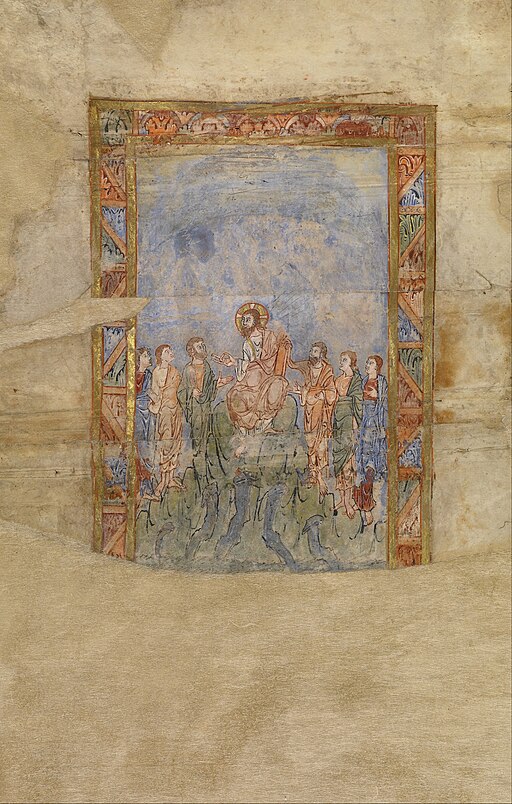
And again, calling the crowd to him, he said to them: “Listen to me, all of you, and understand. There is nothing from outside a man which, by entering into him, is able to defile him. But the things which procede from a man, these are what pollute a man.
Whoever has ears to hear, let him hear.”
And when he had entered into the house, away from the crowd, his disciples questioned him about the parable. And he said to them: “So, are you also without prudence? Do you not understand that everything entering to a man from outside is not able to pollute him?
For it does not enter into his heart, but into the gut, and it exits into the sewer, purging all foods.” “But,” he said “the things which go out from a man, these pollute a man.
For from within, from the heart of men, proceed evil thoughts, adulteries, fornications, murders, thefts, avarice, wickedness, deceitfulness, homosexuality, an evil eye, blasphemy, self-exaltation, foolishness. All these evils procede from within and pollute a man.”
What do the Fathers Say?
PSEUDO-CHRYSOSTOM. Victor of Antioch. The Jews regard and murmur about only the bodily purification portion of the law; our Lord wishes to bring in the contrary.
The things of Christ have relation to the inner man, but those which are of the law are visible and external, and which, being of the body, the cross of Christ was shortly to put to an end.
The Venerable BEDE. For that man is a faulty hearer who considers what is obscure to be a clear speech, or what is clear to be obscure.
From this passage are condemned those men who suppose that thoughts are put into them by the devil, and do not arise from their own evil will. The devil may excite and help on evil thoughts, he cannot be their author.
GLOSSARIA. (Nicholas de Lyra ) From evil thoughts, however, evil actions proceed to greater lengths, concerning which it is added, adulteries, that is, acts which consist in the violation of another man’s bed; fornications, which are unlawful connexions between persons, not bound by marriage; murders, by which hurt is inflicted on the person of one’s neighbour; thefts, by which his goods are taken from him; covetousness, by which things are unjustly kept; wickedness, which consists in calumniating others; deceit, in overreaching them; lasciviousness, to which belongs any corruption of mind or body.
St THEOPHYLACT. An evil eye, that is, hatred and flattery, for he who hates turns an evil and envious eye on him whom he hates, and a flatterer, looking askance at his neighbour’s goods, leads him into evil; blasphemies, that is, faults committed against God; pride, that is, contempt of God, when a man ascribes the good, which he does, not to God, but to his own virtue; foolishness, that is, an injury against one’s neighbour.
GLOSSARIA. (Summa Theologica) Foolishness consists in wrong thoughts concerning God; for it is opposed to wisdom, which is the knowledge of divine things. It goes on, All these evil things come from within, and defile the man. For whatsoever is in the power of a man, is imputed to him as a fault, because all such things proceed from the interior will, by which man is master of his own actions.