Gregory of Nyssa (c. 335 – c. 394) was a prominent theologian and bishop, recognized as one of the three Cappadocian Fathers alongside his brother, St. Basil the Great, and their friend St. Gregory of Nazianzus. Known as the “Father of Mysticism,” he played a vital role in finalizing the orthodox doctrine of the Trinity.
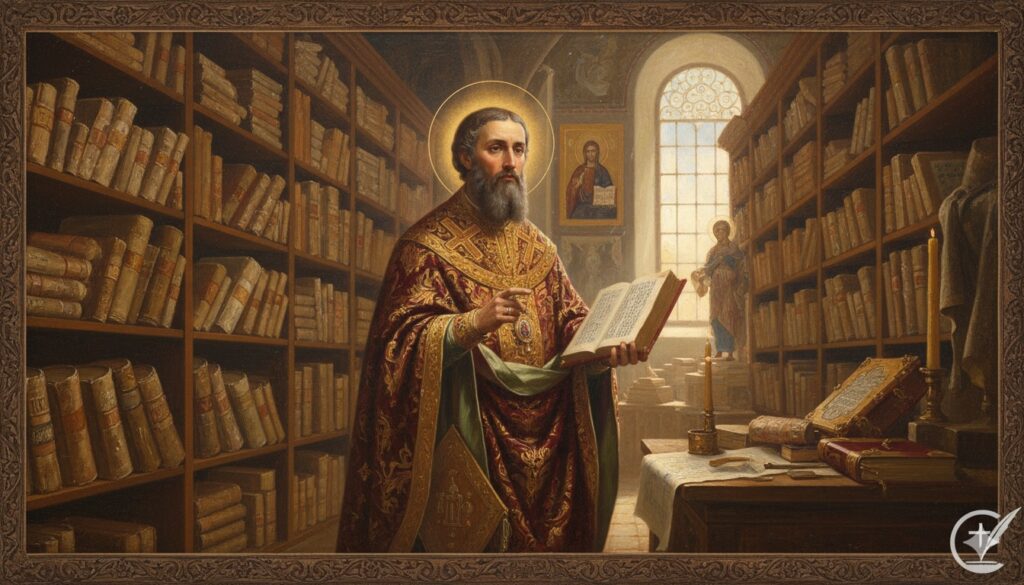
Early Life and Family
- Background: Born into a wealthy, devout Christian family in Caesarea, Cappadocia (modern-day Turkey). He was one of ten children; his siblings included St. Basil the Great and St. Macrina the Younger, both of whom profoundly influenced his spiritual development.
- Education: Unlike Basil, who received formal education in Athens, Gregory was largely self-taught, studying under his brother and sister. He was highly influenced by Hellenic philosophy (Platonism) and the works of Origen.
- Career: Initially, he pursued a secular career as a teacher of rhetoric. It is debated whether he was married; while some accounts mention a wife named Theosebeia, others suggest she may have been a spiritual sister or that Gregory eventually embraced a monastic life.
______________________________________________________________________
Ecclesiastical Career
- Bishop of Nyssa: In 372, his brother Basil consecrated him as the Bishop of Nyssa to strengthen the “Nicene” (orthodox) party against Arianism.
- Exile: He was not a natural administrator and faced false accusations of financial mismanagement by Arian opponents. He was deposed and exiled in 376 by Emperor Valens but returned triumphantly in 378 after the emperor’s death.
- Council of Constantinople (381): Following Basil’s death in 379, Gregory became a leader of the orthodox faith. He was a key figure at the Second Ecumenical Council, where he helped refine the Nicene Creed, specifically clarifying the divinity of the Holy Spirit.
____________________________________________________________________________
Theological Contributions & Works
Gregory is celebrated for synthesizing Christian revelation with Greek philosophical thought.
- Infinity of God: He was one of the first theologians to argue that God is essentially infinite and incomprehensible to the human mind.
- “Epektasis” (Constant Progress): He taught that the spiritual life is a process of never-ending growth toward God, rather than a static state of perfection.
- Key Works:
- The Life of Moses: A mystical and allegorical interpretation of Moses’ life as a paradigm for the soul’s journey to God.
- Life of Macrina: A biography and tribute to his sister, blending history with monastic instruction.
- Against Eunomius: A rigorous defense of the Trinity against Arian teachers
____________________________________________________________________________
Legacy
Known by the title “Father of Fathers” (bestowed by the Seventh Ecumenical Council in 787), Gregory remains a cornerstone of Eastern Orthodox and Western theology. His feast day is celebrated on January 10 (Orthodox) and March 9 (Catholic).