
Friday of the Fourth week in Lent
John 7:1-2, 10, 25-30
“No one laid hands on him, because his hour had not yet come.”
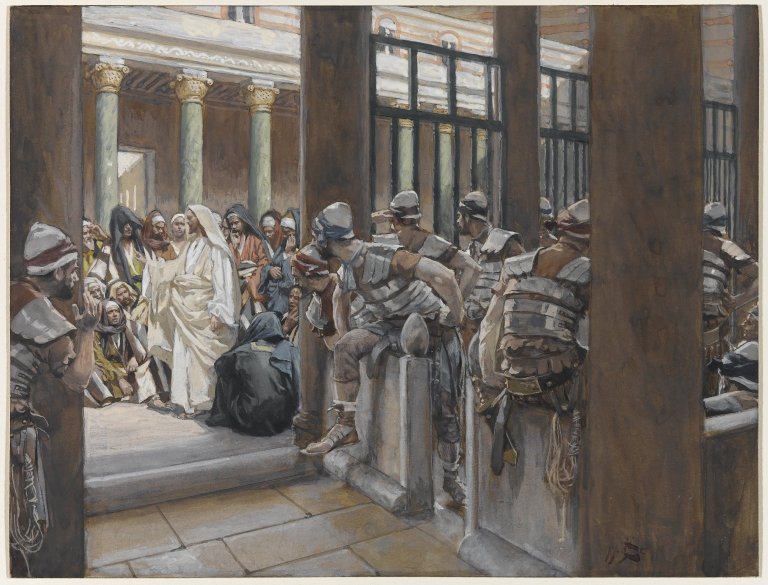
Then, after these things, Jesus was walking in Galilee. For he was not willing to walk in Judea, because the Jews were seeking to kill him.
Now the feast day of the Jews, the Feast of Tabernacles, was near.
But after his brothers went up, then he also went up to the feast day, not openly, but as if in secret.
Therefore, some of those from Jerusalem said: “Is he not the one whom they are seeking to kill? And behold, he is speaking openly, and they say nothing to him. Could the leaders have decided that it is true this one is the Christ? But we know him and where he is from. And when the Christ has arrived, no one will know where he is from.”
Therefore, Jesus cried out in the temple, teaching and saying: “You know me, and you also know where I am from. And I have not arrived of myself, but he who sent me is true, and him you do not know.
I know him. For I am from him, and he has sent me.”
Therefore, they were seeking to apprehend him, and yet no one laid hands on him, because his hour had not yet come.
What do the Fathers say?
St AUGUSTINE. It is not meant that our Lord could not walk among the Jews, and escape being killed; for He had this power, whenever He chose to show it: but He set the example of so doing, as an accommodation to our weakness. He had not lost His power, but He indulged our frailty.
St John CHRYSOSTOM. That is to say, He displayed the attribute both of divinity and humanity. He fled from His persecutors as man, He remained and appeared amongst them as God; being really both.
St AUGUSTINE. What the feast of tabernacles is, we read in the Scriptures. They used to make tents on the festival, like those in which they lived during their journey in the desert, after their departure from Egypt. They celebrated this feast in commemoration of the good things the Lord had done for them; though they were the very people who were about to slay the Lord. Although it is called the day of the feast, it lasted many days.
St John CHRYSOSTOM. He goes up, not to suffer, but to teach. And He goes up secretly; because, though He could have gone openly, and kept the violence and impetuosity of the Jews in check, as He had often done before; yet to do this every time, would have disclosed His divinity; and he wished to establish the fact of His incarnation, and to teach us the way of life.
And He went up privately too, to show us what we ought to do, who cannot check our persecutors.
It is not said, He went in secret, but, as it were in secret; to show that it was done as a kind of prudence. For had He done all things as God, how would we of this world know what to do, when we fell into danger?
St AUGUSTINE. It was said above that, our Lord went up to the feast secretly, not because He feared being taken (for He had the power to prevent it,) but to show figuratively, that even in the very feast which the Jews celebrated, He was hid, and that it was His mystery.
Now however the power appears, which was thought timidity: He spoke publicly at the feast, in so much that the multitude marvelled: They said some of them at Jerusalem, Is not this He, whom they seek to kill? but, lo, He speaks boldly, and they say nothing to Him. They knew the fierceness with which He had been sought for; they marvelled at the power by which he was not taken.
So, not fully understanding Christ’s power, they supposed that it was owing to the knowledge of the rulers that He was spared: Do the rulers know indeed that this is the very Christ?
And to show how they could get to know Him (who had sent Him), He adds, I know Him: so if you want to know Him, enquire of Me. No one knows the Father, save the Son, and he to whom the Son will reveal Him. And if I should say, I know Him not, I should be a liar like you.
St John CHRYSOSTOM. His saying however, Whom ye know not, irritated the Jews, who professed to have knowledge; and they sought to take Him, but no man laid hands on Him.
Mark the invisible check which is kept upon their fury: though the Evangelist does not mention it, but preserves purposely a humble and human way of speaking, in order to impress us with Christ’s humanity; and therefore only adds, Because His hour was not yet come.
St AUGUSTINE. If your hour is in His will, is not His hour in His own will? His hour here does not mean the time that He was obliged to die, but the time that He deigned to be put to death.