
Saints of the Day; 22 June
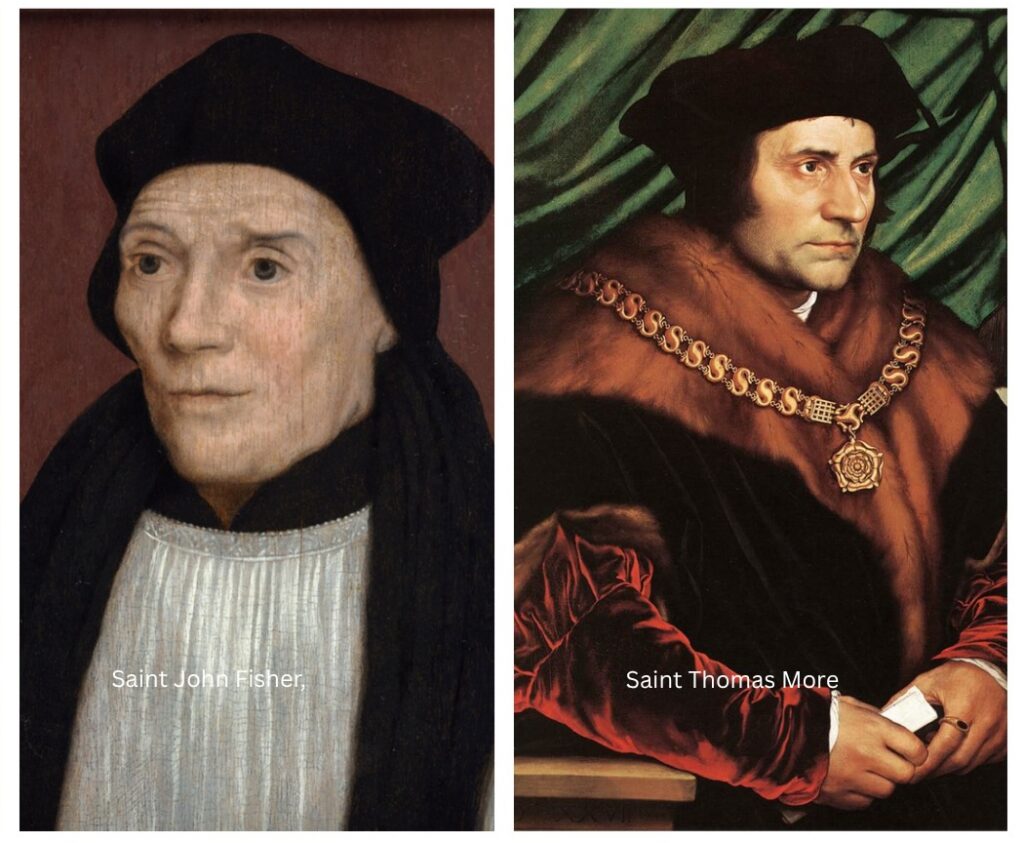
Saint John Fisher (1469 – 22 June 1535) is one of the most intellectually formidable and deeply resilient figures of the Tudor era. Serving as the Bishop of Rochester and Chancellor of Cambridge University, he was famous for his deep scholarship and personal asceticism.
Saint Thomas More (7 February 1478 – 6 July 1535) stands as one of the most brilliant intellectuals, statesmen, and authors. A master of classical rhetoric, he rose to become the Lord Chancellor of England—the highest judicial office in the realm. He is universally celebrated for his literary classic Utopia (1516) and his ultimate sacrifice for his moral convictions.
The executions of Bishop John Fisher (June 22, 1535) and Sir Thomas More (July 6, 1535) were the explosive climaxes of “The King’s Great Matter”—King Henry VIII’s desperate, multi-year campaign to secure a male heir.
By the late 1520s, Henry VIII had been married to the Spanish princess Catherine of Aragon for nearly twenty years. They had only one surviving child, Princess Mary, and Catherine was past her childbearing years. Obsessed with securing a male heir to protect the Tudor dynasty from civil war, and deeply infatuated with a young noblewoman named Anne Boleyn, Henry sought an annulment from the Pope.
The Pope refused.
Henry’s advisors—chiefly Thomas Cromwell and Thomas Cranmer—suggested a radical solution: if the Pope would not give Henry a divorce, Henry should simply declare that the Pope had no authority over England.
Between 1532 and 1534, Henry and Parliament systematically dismantled Catholic power in England through a series of sweeping legal manoeuvres:
Both John Fisher (the Bishop of Rochester) and Thomas More were deeply devout Catholics who viewed the Pope’s spiritual authority as divinely ordained and unalterable by a secular king.
John Fisher: He had openly defended Queen Catherine during the divorce trials, comparing himself to John the Baptist defending the sanctity of marriage. When asked to swear the Act of Succession, he flatly refused because its preamble denied papal authority.
He was thrown into the Tower of London. During Fisher’s imprisonment, the Pope defiantly named Fisher a Cardinal which infuriated Henry VIII. John Fisher was beheaded on June 22 1535.
Thomas More: Realizing he could not support the King’s religious shift, More resigned as Lord Chancellor in 1532. When summoned to take the Oath of Succession, he refused.
Henry changed the laws. The Treasons Act of 1534 made it a capital crime to deny the King’s titles, including Supreme Head of the Church. Using rigged testimony from a royal official, Richard Rich. who claimed More had spoken against the supremacy in private, More was convicted of treason. He was beheaded on July 6, 1535.
These events cleared the final obstacles for Henry and Thomas Cromwell to launch the Dissolution of the Monasteries, seizing vast church wealth and fundamentally transforming the religious, economic, and cultural landscape of England forever.
Sources:
Famoustrials.com
Wikipedia