
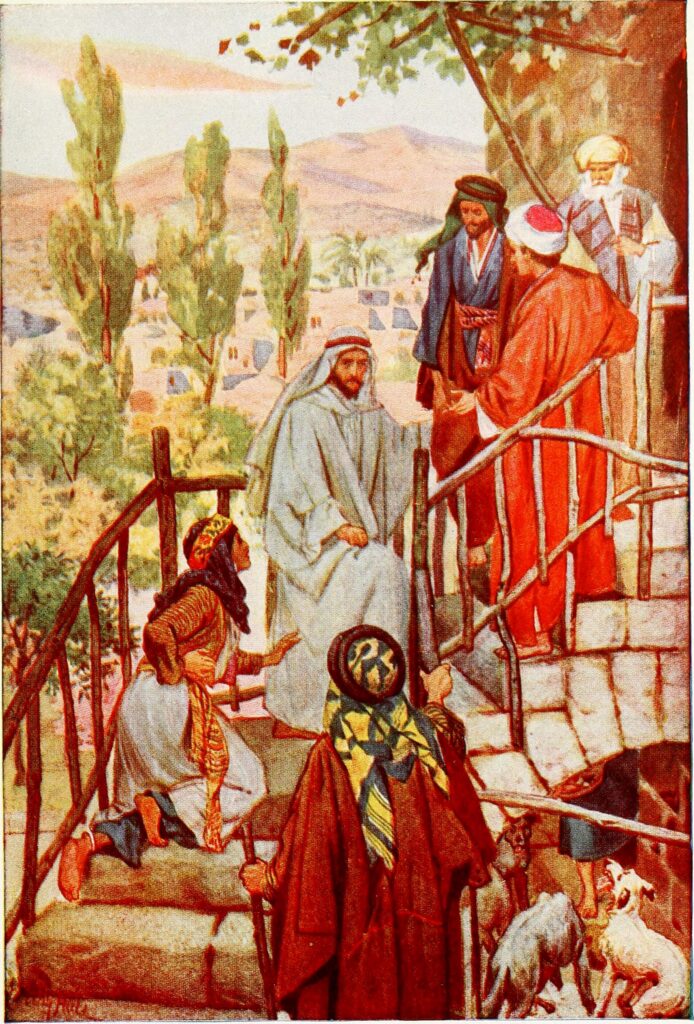
Gospel Reading : Matthew 13:10-17
Then the disciples came and said to him, “Why do you speak to them in parables?”
And he answered them, “To you it has been given to know the secrets of the kingdom of heaven, but to them it has not been given.
For to him who has will more be given, and he will have abundance; but from him who has not, even what he has will be taken away.
This is why I speak to them in parables, because seeing they do not see, and hearing they do not hear, nor do they understand.
With them indeed is fulfilled the prophecy of Isaiah which says:
‘You shall indeed hear but never understand,
and you shall indeed see but never perceive.
For this people’s heart has grown dull,
and their ears are heavy of hearing,
and their eyes they have closed,
lest they should perceive with their eyes,
and hear with their ears,
and understand with their heart,
and turn for me to heal them.’
But blessed are your eyes, for they see, and your ears, for they hear. Truly, I say to you, many prophets and righteous men longed to see what you see, and did not see it, and to hear what you hear, and did not hear it.
What do the Fathers say?
It is noteworthy that the disciples who desire to learn from Him, know when they ought to ask Him, for they do not do this before the multitude.
He does not imply any necessity or fate, but shows that they, to whom it is not given, are the cause of all their own miseries, and that the knowledge of the Divine mysteries is the gift of God, and a grace given from above.
However, this does not destroy free will, He shows that the beginning of all lays with ourselves, and then He adds, For to him who has will more be given, and he will have abundance; but from him who has not, even what he has will be taken away..
As much as to say, Whoso has the desire and the zeal, to him shall be given all those things which are of God; but whoso lacks these, and does not contribute that part that pertains to him, to him neither are the things which are of God given, but even those things that he has are taken from him; not because God takes them away, but because he has made himself unworthy of those that he has.
Therefore we also, if we see any hearkening carelessly, and having exhorted him to attend, he do not heed us, let us be silent; for should we persevere in urging him, his sloth-fulness will be held against him. But him that is zealous to learn, we draw onwards, pouring forth many things.
And so that what He had said might be made more manifest He adds, This is why I speak to them in parables, because seeing they do not see, and hearing they do not hear, nor do they understand. Had this been a natural blindness, He would have opened their eyes; but since it is voluntary, therefore He said not simply, ‘They do not see,’ but, ‘Seeing they do not see.’
For they had seen the dæmons going out, and they said, He casts out dæmons by Beelzebub; they heard that He drew all men to God, and they say, This man is not of God. (John 9:16)
Therefore because they spoke the very contrary to what they saw and heard, to see and to hear is taken from them; for they profit nothing thereby, but rather fall under judgment.
For this reason He spoke to them at first not in parables, but with much clearness; but because they perverted all they saw and heard, He now speaks in parables.
And that they should not say, He slanders us as an enemy, He brings forward the Prophet declaring the same opinion, as it follows, That there might be fulfilled in them the prophecy of Isaiah, who said, With the hearing ye shall hear and shall not understand, and seeing ye shall see and shall not behold. (Is. 6:9)
He points out how extreme their wickedness, how determined their aversion. Again to draw them towards Him, He adds, And be converted, and I should heal them; which shows that if they wanted to be be converted, they would be healed. As if one should say, If he would ask me I would immediately forgive him, this would point out how he might be reconciled; so here when He says, Lest they should he converted and I should heal them, He, shows that it was possible they should be converted, and having done penitence should be saved.
These things then which the Apostles saw and heard, are such as His presence, His voice, His teaching. And in this He places them before not the evil only, but even before the good, pronouncing them more blessed than even the righteous men of old. For they saw not only what the Jews did not see, but also what the righteous men and Prophets desired to see, and had not seen. For they had beheld these things only by faith, but these by sight, and even yet more clearly.
Sources:
Bible readings from the Revised Standard Version of the Bible, Second Catholic Edition, copyright © 2006 National Council of the Churches of Christ in the USA
Quotes of the Fathers from :
Thomas Aquinas’ Catena Aurea Translated by St John Henry Newman
Artwork ex Wikimedia Commons