Gospel Reading :Matthew 12:1-8
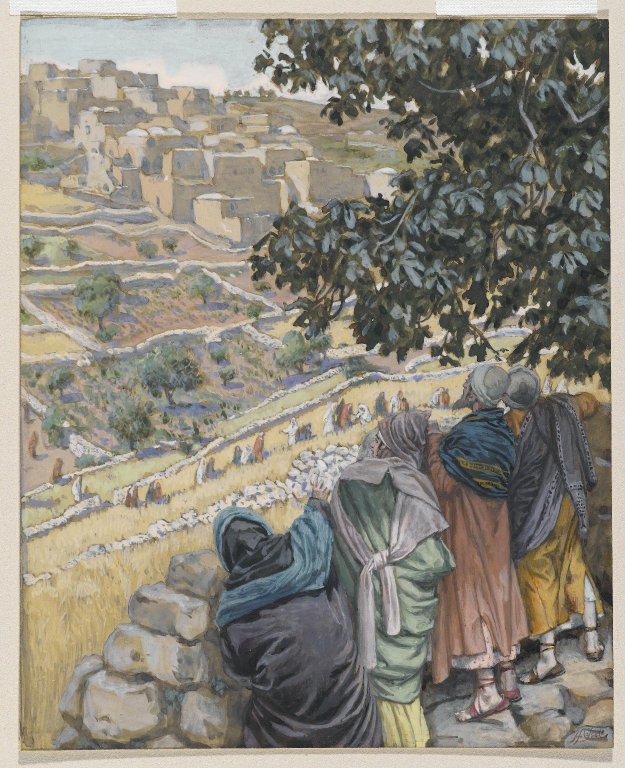
At that time Jesus went through the grain-fields on the sabbath; his disciples were hungry, and they began to pluck ears of grain and to eat.
But when the Pharisees saw it, they said to him, “Look, your disciples are doing what is not lawful to do on the sabbath.”
He said to them, “Have you not read what David did, when he was hungry, and those who were with him: how he entered the house of God and ate the bread of the Presence, which it was not lawful for him to eat nor for those who were with him, but only for the priests?
Or have you not read in the law how on the sabbath the priests in the temple profane the sabbath, and are guiltless?
I tell you, something greater than the temple is here.
And if you had known what this means, ‘I desire mercy, and not sacrifice,’ you would not have condemned the guiltless. For the Son of man is Lord of the sabbath.”
What do the Fathers say?
St John CHRYSOSTOM. Why then did He lead them through the grain fields on the sabbath, seeing that He knew all things, unless He desired to break the sabbath? This he desired indeed, but not absolutely, therefore He broke it not without cause, but furnished a sufficient reason; so that He both caused the Law to cease, and yet offended not against it.
Thus in order to soften the Jews, He here introduces a natural necessity; this is what is said, And his disciples being hungry, began to pluck the ears of corn, and to eat. Although in things which are manifestly sinful, there can be no excuse, he who kills another cannot plead rage, nor he who commits adultery, lust, or any other cause; yet here saying that the disciples were hungry, He delivers them from all accusation.
St JEROME. As we read in another Evangelist, they had no opportunity of taking food because of the thronging of the multitude, and therefore they hungered as men. That they rub the ears of corn in their hands, and with them satisfy themselves, is a proof of an austere life, and of men who needed not prepared meats, but sought only simple food.
St AUGUSTINE. The Jews rather charged the Lord’s disciples with the breach of the sabbath than with theft; because it was commanded the people of Israel in the Law (Deut. 23:25.), that they should not lay hold of any as a thief in their fields, unless he sought to carry ought away with him; but if any touched only what he needed to eat, him they suffered to depart with impunity free.
St John CHRYSOSTOM. To clear His disciples, He brings forward the instance of David, whose glory as a Prophet was great among the Jews. Yet they could not here answer that this was lawful for him, because he was a Prophet; for it was not Prophets, but Priests only who might eat. And the greater was he who did this, the greater is the defence of the disciples; yet though David was a Prophet, they that were with him were not.
But some one will say, How is the instance of David eating the show-bread applicable to the question in hand? For David did not transgress the sabbath.
Herein is shown the wisdom of Christ, that He brings forward an instance stronger than the sabbath. For it is by no means the same thing to violate the sabbath, and to touch that sacred table, which is lawful for none.
And then, He adds yet another answer, saying, Or have you not read in the Law, that on the sabbath days the Priests in the temple profane the sabbath, and are blameless?
St JEROME. As though He had said, You bring complaints against my disciples, that on the sabbath they rub ears of grain in their hands, under stress of hunger, and you yourselves profane the sabbath, slaying victims in the temple, killing bulls, burning holocausts on piles of wood; also, on the testimony of another Gospel (John 7:23.), you circumcise infants on the sabbath; so that in keeping one law, you break that concerning the sabbath.
St John CHRYSOSTOM. But that you should not say to me, that to find an instance of another’s sin is not to excuse our own—indeed where the thing done and not the doer of it is accused, we excuse the thing done. But this is not enough, He said what is yet more, that they are blameless.
But see how great things He brings in; first, the place, in the Temple; secondly, the time, on the sabbath; the setting aside the Law, in the word profane, not merely break; and that they are not only free from punishment but from blame; and are blameless.
And this second instance is not like the first which He gave respecting David; for that was done but once, by David who was not a Priest, and was a case of necessity; but this second is done every sabbath, and by the Priests, and according to the Law. So that not only by indulgence, as the first case would establish, but by the strict law the disciples are to be held blameless.
But are the disciples Priests? yes, they are yet greater than Priests, forasmuch as He was there who is the Lord of the Temple, who is the reality and not the type; and therefore it is added, But I say unto you, one greater than the Temple is here.
St REMIGIUS. He calls Himself the Son of Man, and the meaning is, He whom you suppose a mere man is God, the Lord of all creatures, and also of the sabbath, and He has therefore power to change the law after His pleasure, because He made it.
St HILARY. Figuratively; First consider that this discourse was held at that time, namely, when He had given thanks to the Father for giving salvation to the Gentiles. The field is the world, the sabbath is rest, the grain denotes the ripening of them that believe for the harvest; thus His passing through the grain field on the sabbath, is the coming of the Lord into the world in the rest of the Law; and the hunger of the disciples is their desire for the salvation of men.
St RABANUS. They pluck the ears of grain when they withdraw men from devotion to the world; they rub them in their hands when they tear away their hearts from the lusts of the flesh; they eat the grain when they transfer such as are amended into the body of the Church.
St HILARY. The Pharisees, who thought that the key of the kingdom of heaven was in their hands, accused the disciples of doing what was not lawful to do; whereon the Lord reminded them of deeds in which, under the guise of facts, a prophecy was concealed; and that He might show the power of all things, He further added, that it contained the form of that work which was to be, Had you known what that meant, I will have mercy; for the work of our salvation is not in the sacrifice of the Law, but in mercy; and the Law having ceased, we are saved by the mercy of God. Which gift if they had understood they would not have condemned the innocent, that is His Apostles, whom in their jealousy they were to accuse of having transgressed the Law, where the old sacrifices having ceased, the new dispensation of mercy came through them to the aid of all.
Sources:
Bible readings from the Revised Standard Version of the Bible, Second Catholic Edition, copyright © 2006 National Council of the Churches of Christ in the USA
Quotes of the Fathers from :
Thomas Aquinas’ Catena Aurea Translated by St John Henry Newman
Artwork ex Wikimedia Commons