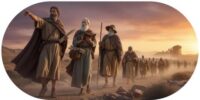
Pope St. Leo the Great (c. 400–461 AD)
Pope St. Leo I, was one of the most influential and transformative pontiffs in the history of the Catholic Church. Serving as Bishop of Rome during a time of immense political and religious upheaval, his leadership solidified papal authority, defined core Christian doctrines, and famously protected the city of Rome from barbarian invaders.
He is one of only two popes in history—the other being Pope Gregory the Great—to have been universally bestowed the title “the Great.” He was also the first pope to be declared a Doctor of the Church.

Early Life
- Origin: Historical details about his birth and parentage are extremely scarce. Here is what is known based on archival and biographical records: Leo was born around 400 AD . Most historical sources, including the Liber Pontificalis, state he was of Tuscan origin, suggesting he was born in the region of Tuscany, Italy. However, because he spent his entire known career in Rome and referred to Rome as his “homeland” in his writings, some scholars speculate he may have been born in Rome itself to a family of Tuscan origin.
- Family Background: Only one piece of information about his family has survived. His father’s name is recorded in the Liber Pontificalis as Quintianus. Beyond his father’s name, nothing is known about his mother or whether he had siblings. Given his excellent education (demonstrated by his masterful Latin style) and his rapid rise to prominence as a deacon in Rome, it is traditionally assumed he came from a culturally significant or perhaps aristocratic Roman family.
Election
- Deaconate: He served as a deacon in the Church in Rome Under Pope Celestine I and later under Pope Sixtus III. His diplomatic and political talents were quickly recognized, and he became a key troubleshooter for the papacy.
- Election: Leo possessed a rare combination of legal precision, brilliant administrative capability, and profound theological depth. He was so well-respected as a diplomat that in 440, while he was away in Gaul settling a massive political dispute between Rome’s top military commanders, Pope Sixtus III died. Leo was elected pope unanimously in absentia and returned to Rome to be consecrated on September 29, 440.
Key Events of His Pontificate (440–461)
Leo’s 21-year papacy was characterized by a relentless focus on unity, both doctrinal and political, as the Western Roman Empire began to disintegrate.
1. Defending the Faith: The Council of Chalcedon (451)
Leo’s most enduring legacy is his theological defense of the true nature of Jesus Christ. In the 5th century, a massive heresy called Monophysitism (led by an abbot named Eutyches) arose in the East, claiming that Jesus’s divine nature completely swallowed up his human nature, leaving him with only a divine nature.
Leo recognized that if Jesus wasn’t fully human, humanity could not truly be saved. In 449, he wrote a masterpiece of theology known as the Tome of Leo (Epistola Dogmatica) to the Bishop of Constantinople. This letter clarified the orthodox doctrine of the Incarnation, asserting that Jesus Christ is one Person with two full and distinct natures—both fully God and fully man inseparably united in one person – the Hypostatic Union).
When this letter was finally read aloud at the Council of Chalcedon in 451 AD, the gathered bishops famously stood up and shouted:
“This is the faith of the fathers! This is the faith of the Apostles! … Peter has spoken through the mouth of Leo!”
The council affirmed his doctrine, which remains the definitive definition of Christology for Catholic, Orthodox, and Protestant Christians.
2. Diplomat and Peacemaker: Facing Attila and the Vandals
Leo’s papacy was defined by extreme geopolitical vulnerability. The Western Roman Empire was crumbling, and civil authorities were powerless. Leo stepped into the vacuum as a secular protector when Roman imperial authority failed.
- Attila the Hun (452): .Attila the Hun had marched into Italy, sacking cities and heading straight for an undefended Rome. With no army to protect the city, the Roman Emperor and Senate asked Leo to negotiate. Leo traveled to northern Italy to personally meet the fierce conqueror. Leo met Attila face-to-face near Mantua and persuaded him to spare Rome. While the exact details of their dialogue remain lost to history, Leo successfully persuaded Attila to turn his armies back and leave Rome untouched. While historians speculate that plague and food shortages in Attila’s camp may have played a role, Leo’s sheer moral authority, diplomatic skill, and promise of tribute is universally seen as a decisive moment that saved the city.
Legend later claimed that Attila saw a vision of St. Peter standing behind Leo holding a flaming sword. - The Vandals (455): Three years later, the Vandal king Genseric successfully breached the walls of Rome. While Leo could not prevent the city from being occupied and plundered, his personal intervention prevented the city from being burned to the ground, halted wholesale slaughter, and protected the major basilicas of St. Peter and St. Paul as sanctuaries for the citizens.
3. Asserting Papal Primacy
Leo was a tireless champion of the principle of Papal Primacy, arguing that the Bishop of Rome, as the successor to St. Peter, held supreme spiritual authority over the entire Church. He structured the institutional Church tightly around this concept, ensuring that global bishops looked to Rome for final canonical decisions. He worked to centralize this authority and intervene in disputes across the empire to maintain unity and orthodoxy.
4 . Architectural Legacy
Leo was a great builder, restoring the ancient basilicas of Rome that had been damaged by barbarian incursions and earthquakes, ensuring that the physical beauty of the churches mirrored the structural order of Christian doctrine.
Legacy and Veneration
- Death and Burial: Pope St. Leo the Great died on November 10, 461. He was the first pope buried near the tomb of St. Peter in the Vatican.
- Doctor of the Church: In 1754, Pope Benedict XIV declared St. Leo a Doctor of the Church, recognizing the exceptional value of his writings and sermons. His collection of surviving writings—including 96 sermons and 143 letters—remains a foundational pillar of Christian theology. Leo’s ability to take dense cosmic mysteries (like the Ascension or the Incarnation) and render them into beautiful, accessible liturgical reality fundamentally shaped Western Christian thought.
- Feast Day: His feast day is celebrated on November 10th in the Catholic liturgical calendar.
Sources:
The writings of Pope St. Leo the Great – Newadvent.org
The Liber Pontificalis
The Acts of the Council of Chalcedon