Saint of the Day – 3 June
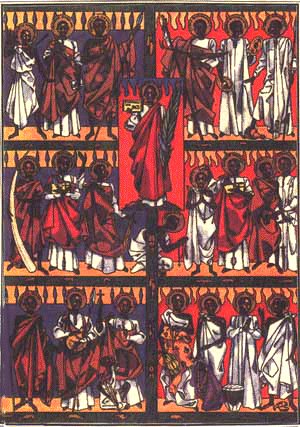
Charles Lwanga and companions – Albert Wider (1962)
The story of Saint Charles Lwanga and the Martyrs of Uganda is a powerful, dramatic, and intensely moving account of faith, moral courage, and leadership in modern Church history. It echoes the raw intensity of the early Roman trials while serving as a foundational pillar for Christianity in modern Africa.
The Corrupt Royal Court
The story takes place between 1885 and 1887 in the Kingdom of Buganda (modern-day Uganda). French Catholic missionaries, known as the “White Fathers,” had arrived a few years prior and successfully converted several young men and boys who served as royal pages in the palace of King Mutesa.
When King Mutesa died, his son, King Mwanga II, took the throne. Mwanga was a volatile, violent ruler who aggressively demanded absolute submission from his subjects. Furthermore, he was a paedophile who routinely forced himself upon the young boys and pages who served him.
Shielding the Innocent
Initially, the chief steward of the court—a 25-year-old Catholic convert named Joseph Mukasa—acted as a shield for the younger pages. He actively protected the boys from the king’s sexual advances and taught them the Christian virtues of purity and moral integrity.
When Mwanga had a visiting Anglican bishop murdered, Mukasa boldly confronted the king about his brutality and lifestyle. Furious, Mwanga ordered Mukasa to be beheaded and burned on November 15, 1885.
Following Mukasa’s execution, Charles Lwanga stepped forward to take his place as the chief of the royal pages and the leader of the secret Christian community. Lwanga was only about 25 or 26 years old himself, having been baptized just months earlier.
Knowing the grave danger they faced, Lwanga redoubled his efforts. He secretly taught the pages catechism, guarded them at night from the king, and encouraged them to place their loyalty to God above any worldly authority.
The Ultimatum and the Midnight Baptisms
In May 1886, King Mwanga discovered that one of his pages was actively learning Christian prayers. In a towering rage, he ordered the royal compound sealed and summoned the country’s official executioners.
Realizing that their execution was imminent, Charles Lwanga gathered the young catechumens in the dead of night. He secretly baptized those who had not yet received the sacrament, including a 13-year-old boy named Kizito, ensuring they were prepared for whatever was to come.
The next morning, May 26, the king called a grand assembly of the court. He drew a line and issued a stark ultimatum:
“Those who do not pray stand by me; those who do pray, stand over there.”
Led courageously by Charles Lwanga, 15 young pages stepped across the line together. When the king asked if they intended to remain Christians until death, they answered in unison: “Until death!” Mwanga instantly condemned them to be burned alive.
The Joyful March to Namugongo
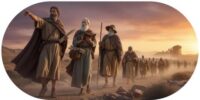
The condemned youth—ranging in age from 13 to 25—were bound tightly with ropes and forced into a brutal, 37-mile march to the traditional execution site at Namugongo.
Witnesses, including the White Fathers who watched them pass, were stunned by the boys’ demeanour. Rather than weeping or begging for mercy, the young men marched with astonishing peace, singing hymns and laughing. The youngest, Kizito, was described as walking and chattering joyfully as if going to a festival. Three of the prisoners were killed by guards along the road for being unable to keep up.
Upon arriving at Namugongo, they were kept bound in prison for seven days; starved and beaten, while preparations for their execution were made. None of them reneged.
In this time, the executioners constructed a massive funeral pyre out of bundles of wood.
Martyrdom by Fire
On June 3, 1886, the day of execution arrived. Because of his role as the leader, Charles Lwanga was separated from the rest of the group to be executed privately. The executioners wrapped him in a reed mat and placed him on a pyre, intentionally lighting a small, slow fire under his feet so that his suffering would be prolonged.
As the flames slowly consumed his legs, Lwanga looked up at the executioner and famously whispered with serene, ironic wit:
“It is as if you are pouring water on me. Please repent and become a Christian like me.”
He prayed quietly until the flames reached his torso. Just before losing consciousness, he cried out in a loud voice, “Katonda!” (My God!), and died.
Shortly thereafter, his young companions were lined up, wrapped in reed mats, and placed together on a single, massive bonfire. Up until their final breaths, the voices of the young boys could be heard echoing through the flames, singing hymns of praise and shouting,
“You can burn our bodies, but you cannot harm our souls!”

Here is a list of all those who were martyred during that time:
1. The Leaders and Protectors
These men were the pillars of the early community who shielded the younger pages and were executed separately from the main group:
- Joseph Mukasa Balikuddembe: The chief steward of the court; beheaded and burned on November 15, 1885, for rebuking the king.
- Charles Lwanga: Took over leadership after Joseph’s death; burned alive on his own separate, slow-burning pyre at Namugongo on June 3, 1886.
- Matthias Kalemba Mulumba (Judge Matthias): An assistant judge and older leader who was dismembered and left to die on May 30, 1886.
2. Martyred En Route to Namugongo
During the brutal 37-mile march from the capital to the execution site, these three pages were executed on the road by the guards:
- Pontian Ngondwe: A royal soldier; speared and cut into pieces on May 26, 1886.
- Athanasius Bazzekuketta: A young page in charge of the treasury; killed on May 27, 1886.
- Gonzaga Gonza: A royal servant; speared and beheaded on May 27, 1886.
3. Burned Alive at the Namugongo Pyre (June 3, 1886)
These are the young pages and court officials who marched joyfully together and died side-by-side in the massive bonfire:
- Kizito: The youngest martyr, only 13 years old.
- Mbaga Tuzinde: The son of the chief executioner; he refused his father’s pleas to renounce his faith and was bludgeoned before being placed in the fire.
- Achilleus Kiwanuka: A 17-year-old clerk and page.
- Ambrose Kibuuka: An 18-year-old page.
- Anatoli Kiriggwajjo: A young page from the royal herds.
- Adolphus Ludigo-Mukasa: A 24-year-old page in charge of the royal gardens.
- Bruno Sserunkuuma: A royal soldier and guard.
- Gyaviira Musoke: A 17-year-old page.
- James Buuzabalyawo: A 26-year-old son of a provisional chief.
- Luke (Lukka) Baanabakintu: A 30-year-old court official.
- Mugagga Lubowa: A 16-year-old page.
- Mukasa Kiriwawanvu: A page who served in the king’s dining quarters.
4. Executed Separately in the Capital
These men were killed in or around the capital city during the broader sweeps of the persecution:
- Andrew Kaggwa: A prominent catechist and master of the royal band; beheaded on May 26, 1886.
- Denis Ssebuggwawo Wasswa: A 16-year-old musician and singer; hacked to death on May 25, 1886.
- Noah Mawaggali: A local leader; speared and tied to a tree on May 31, 1886.
- Jean-Marie Muzeeyi: A brilliant, older palace traditional healer and counselor; he went into hiding but was lured out and secretly beheaded on January 27, 1887, making him the final Catholic martyr of this wave.
The Anglican Companions: While the Catholic Church officially canonized these 22, historical records also note the names of 23 Anglican martyrs who died in the same wave of persecutions—including prominent leaders like Nuwa Walukagga (the king’s blacksmith) and young pages like Yusuf Rugalama. They are honored side-by-side at the shrine in Uganda today.
Legacy and Sainthood
- Canonization: On October 18, 1964, during the Second Vatican Council, Pope Paul VI canonized Charles Lwanga and 21 of his Catholic companions.
- Historical Recognition: In an extraordinary gesture of ecumenical unity, the Church also formally honored the memory of the 11 Anglican pages who died side-by-side with the Catholics.
- Patronage: Saint Charles Lwanga is venerated as the patron saint of African youth, converts, and torture victims

The Uganda Martyrs Catholic Shrine Basilica, Namugongo stands directly upon the historic execution ground where Saint Charles Lwanga and his young companions were martyred in 1886. Consecrated by Pope Paul VI in 1969 and elevated to a minor basilica by Pope John Paul II in 1993, this spectacular architectural masterpiece functions as a focal point for modern African Christianity and one of the largest pilgrimage destinations on the continent.
Every year on June 3rd, millions of pilgrims from across Africa and the world journey to the Namugongo Martyrs’ Basilica to sing, pray, and honour the unshakeable song of faith left behind by Charles Lwanga and his companions.
Sources:
Catholic.org
EWTN. UK
Catholic Online