
Saint of the Day : 22 June
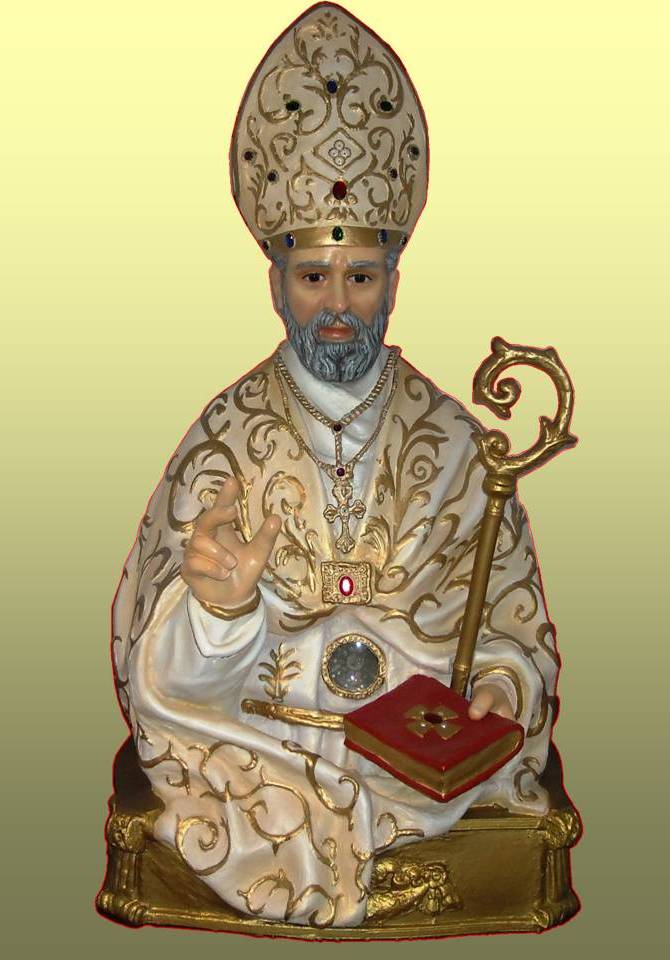
Paulinus of Nola (c. 354 – 431 AD), born Pontius Meropius Anicius Paulinus, stands as one of the most fascinating figures of the late Roman Empire. He bridged the gap between the classical pagan aristocracy and the emerging world of early Christian monasticism and literature.
A highly accomplished poet, senator, and eventual bishop, his life reflects the dramatic cultural and religious shifts of the 4th and 5th centuries.
1. From Roman Aristocrat to Christian Ascetic
Paulinus was born into an incredibly wealthy, patrician family in Burdigala (modern Bordeaux, France). He received a premier classical education under the famous rhetorician and poet Ausonius, who considered Paulinus his finest pupil.
Paulinus advanced rapidly through the Roman political ranks, serving as a senator and eventually becoming the consul suffectus (replacement consul) around 378 AD, followed by a governorship in the southern Italian region of Campania.
However, a series of personal tragedies—including the early death of his infant son and the execution of his brother—led to a profound spiritual crisis. Along with his Spanish wife, Therasia, Paulinus chose to abandon his political career, sell his vast estates across Gaul and Hispania, and distribute the immense wealth to the poor. This sudden divestment shocked the Roman elite, drawing a mix of admiration from figures like St. Augustine and deep dismay from his old tutor Ausonius.
2. The Center at Nola and the Cult of St. Felix
Settling in Nola, a town near Naples in Campania, Paulinus and Therasia established a semi-monastic community. He focused his devotion entirely on St. Felix of Nola, a local third-century martyr.
Paulinus transformed Nola into a major pilgrimage hub by building an expansive basilica complex, complete with hostels for the poor, fountains, and vibrant, decorative frescoes meant to educate illiterate pilgrims.
In 409 AD, after the death of his wife, his deep integration into the local community led to his election as Bishop of Nola, a post he held until his death.
3. Literary Legacy & Innovation
Paulinus was a major force in Christianizing classical Latin literature. Rather than rejecting the poetic forms of Virgil or Horace, he adapted classical meters to serve Christian theology, Scripture, and devotion.
- The Natalicia: His most famous works are a collection of annual poems written to celebrate the feast day of St. Felix (January 14). These poems serve as a crucial historical source for understanding early Christian pilgrimage culture, art, and the developing cult of the saints.
- Epistolary Network: Paulinus maintained an extensive correspondence network with the greatest minds of Western Christendom, including St. Augustine, St. Jerome, St. Ambrose, and Martin of Tours. His letters balance high literary artifice with intimate spiritual counsel.
The Legend of Church Bells
In Christian tradition, Paulinus is popularly credited with the introduction of large bells (campanae) into church worship to summon the faithful, owing to Nola’s location in Campania (a region famed for its high-quality bronze casting). He is the patron saint of bell makers.
Sources :
BENEDICT XVI GENERAL AUDIENCE Wednesday, 12 December 2007
Catholic Encyclopedia