
Saint Lawrence of Rome (c. 225 – 258 AD)
Saint Lawrence was one of the seven deacons of the ancient Church of Rome. He was martyred during the persecution under Emperor Valerian in 258 AD, just four days after the martyrdom of Pope Saint Sixtus II.
He is widely celebrated for his defense of the poor, his sharp wit under extreme suffering, and his enduring status as one of Rome’s principal patron saints.
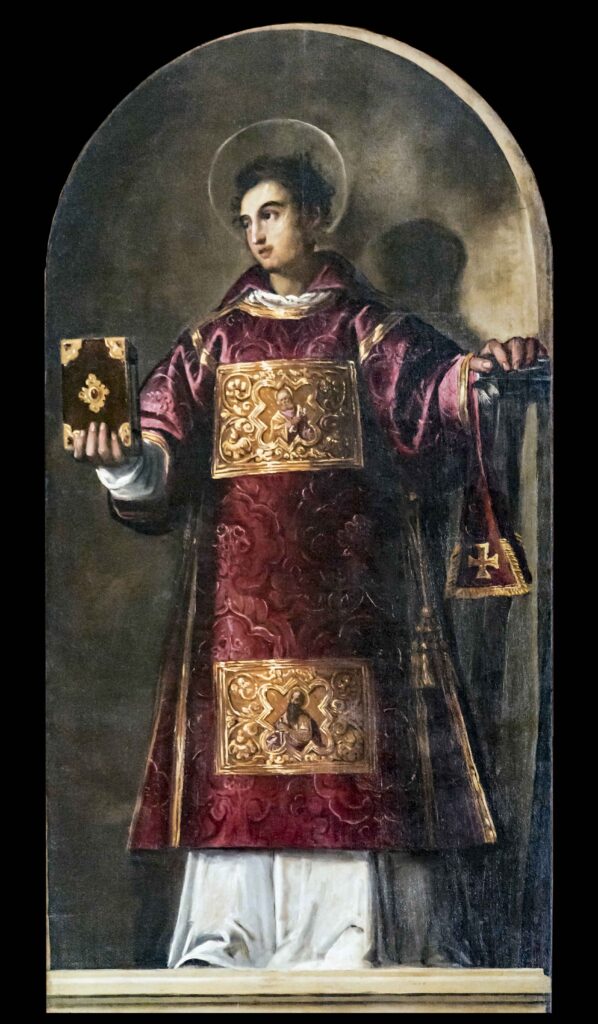
Early Life & Ministry in Rome
- According to tradition, Lawrence was born in Hispania (modern-day Spain) at Osca (Huesca) or Valencia.
- He traveled to Rome, where his piety and administrative talent caught the attention of Pope Sixtus II. In 257 AD, Sixtus ordained Lawrence as a deacon and appointed him Archdeacon of Rome.
- Despite his youth, Lawrence was placed in charge of managing the Church’s financial accounts, maintaining the treasury, and distributing alms to the city’s poor, widowed, orphaned, and sick.
The Valerian Persecution (258 AD)
In August 258 AD, Emperor Valerian issued an edict commanding that all Christian bishops, priests, and deacons be arrested and executed immediately, and that Church property be confiscated by the Roman state.
On August 6, 258, Pope Sixtus II was seized while teaching in the Catacomb of St. Callixtus and immediately beheaded alongside four of his deacons.
“The True Treasures of the Church”
Following the Pope’s death, the Roman Prefect summoned Lawrence and demanded that he surrender the legendary wealth of the Church to fund the emperor’s military campaigns.
Lawrence requested three days to gather all the gold, silver, and monetary assets. During those three days, he worked feverishly throughout Rome to distribute all remaining church funds to the poor and needy so the secular authorities could not seize anything.
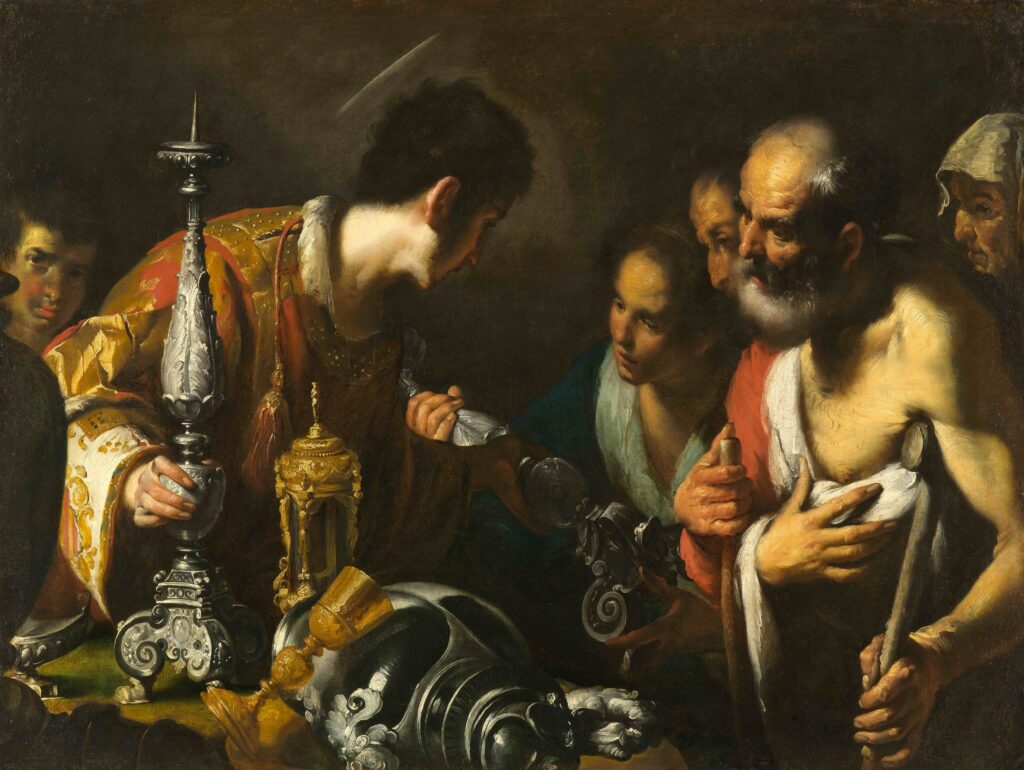
On the third day, Lawrence appeared before the Prefect, leading a massive crowd of Rome’s impoverished, blind, lame, and destitute citizens. Pointing to them, he declared:
“Here are the true treasures of the Church!”
Furious at being outwitted and humiliated, the Prefect ordered Lawrence’s execution.
Martyrdom on the Gridiron
Instead of a quick execution by beheading, the Prefect ordered Lawrence to be tortured on a large gridiron placed over burning coals to prolong his suffering.
According to the famous account recorded by Prudentius and Saint Ambrose of Milan, Lawrence endured the pain with remarkable serenity. After suffering on the flames for a long time, he famously joked to his executioners:
“Assatus est; jam versa et manduca!”
(“I am well cooked on this side; turn me over and eat!”)
He then prayed for the conversion of the city of Rome and died on August 10, 258 AD.
Legacy, Iconography & Patronage
- Burial & Basilica: Lawrence was buried in the Via Tiburtina cemetery. Constantine the Great later built an oratory over his tomb, which grew into the major basilica San Lorenzo fuori le Mura (Saint Lawrence Outside the Walls)—one of the seven pilgrim churches of Rome.
- Patronage: Because of his life and legend, he is the patron saint of:
- Cooks, chefs, and grill-masters
- Comedians and humorists (due to his final witty remark)
- Librarians, archivists, and treasurers (due to his role managing church records and gifts)
- The city of Rome (alongside St. Peter and St. Paul)
- The “Tears of St. Lawrence”: The Perseid meteor shower, which reaches its peak annually around his feast day on August 10, is traditionally known in European folklore as the “Tears of Saint Lawrence”—symbolizing the fiery sparks or fiery tears shed during his martyrdom.
- Iconography: In sacred art, Saint Lawrence is almost always depicted wearing a deacon’s dalmatic, holding a palm branch of martyrdom, and carrying a gridiron or a purse of coins.
Sources:
Catholic Encyclopaedia
Wikipedia