
John 3:31-36“
“He who comes from heaven is above all. “
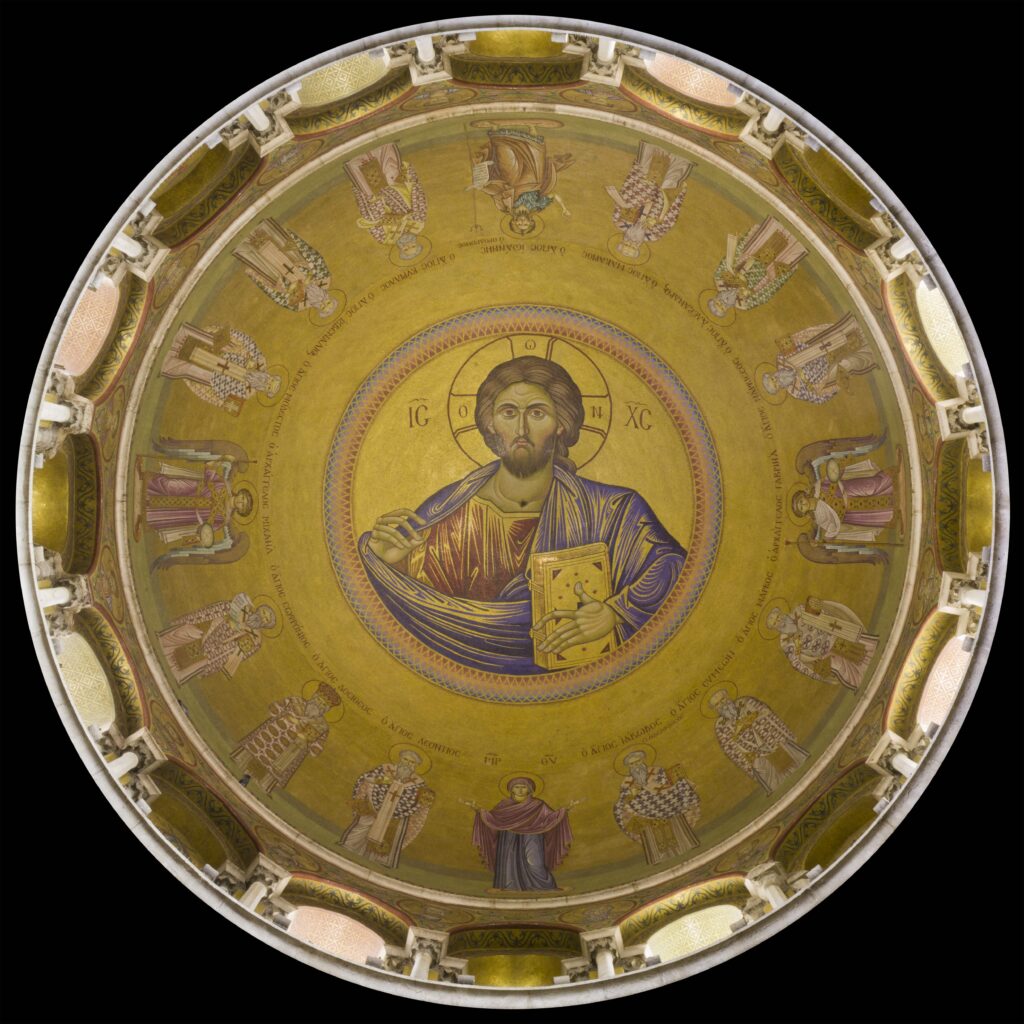
He who comes from above is above all; he who is of the earth belongs to the earth, and of the earth he speaks; he who comes from heaven is above all.
He bears witness to what he has seen and heard, yet no one receives his testimony; he who receives his testimony sets his seal to this, that God is true.
For he whom God has sent utters the words of God, for it is not by measure that he gives the Spirit; the Father loves the Son, and has given all things into his hand. He who believes in the Son has eternal life; he who does not obey the Son shall not see life, but the wrath of God rests upon him.
What do the Fathers say?
(Follow the links to learn more about the Fathers)
St John CHRYSOSTOM. John reiterates for his disciples: He that comes from above is above all: meaning, You extol my testimony, and say that the witness is more worthy to be believed, than He to whom he bears witness. Know this, that He who comes from heaven, cannot be accredited by an earthly witness. He is above all; being perfect in Himself, and above comparison.
And yet he, John, was not altogether of the earth; for he had a soul, and partook of a spirit, which was not of the earth.
He said this of himself only to express his own worthlessness, that he is one born on the earth, creeping on the ground, and not to be compared with Christ, Who comes from above. As if he said, My doctrine is mean and humble, compared with Christ’s; as becomes an earthly teacher, compared with Him, (Col. 2:3) in Whom are hid all the treasures of wisdom and knowledge.
John adds this argument in favour of Christ, that, what he has seen and heard, is what he testifies to; meaning that every thing which He says is true. I want, says John, to hear what things He, Who comes from above, has seen and heard, i. e. what He, and He alone, knows with certainty.
For it is as much as saying, no one can disbelieve Christ without convicting God, Who sent Him, of falsehood: inasmuch as He speaks nothing but what is of the Father. For He, it follows, Whom God has sent, speaks the words of God.
St ALCUIN. explains “comes from above”; i. e. from the height of that human nature which was before the sin of the first man. For it was that human nature which the Word of God assumed: He did not take upon Himself man’s sin, as He did his punishment.
St AUGUSTINE. But what is it, which the Son has heard from the Father? Has He heard the word of the Father? Yes, but He is the Word of the Father. When you conceive a word, wherewith to name a thing, the very conception of that thing in the mind is a word. Just then as you have in your mind and with you your spoken word; even so God uttered the Word, i. e. begat the Son. Since then the Son is the Word of God, and the Son has spoken the Word of God to us, He has spoken to us the Father’s word. What John said is therefore true.
St THEOPHYLACT. The Father then has given all things to the Son in respect of His divinity; of right, not of grace. Or; He has given all things into His hand, in respect of His humanity: inasmuch as He is made Lord of all things that are in heaven, and that are in earth.
St ALCUIN. And because all things are in His hand, the life everlasting is too: and therefore it follows, He that believes in the Son has everlasting life.