
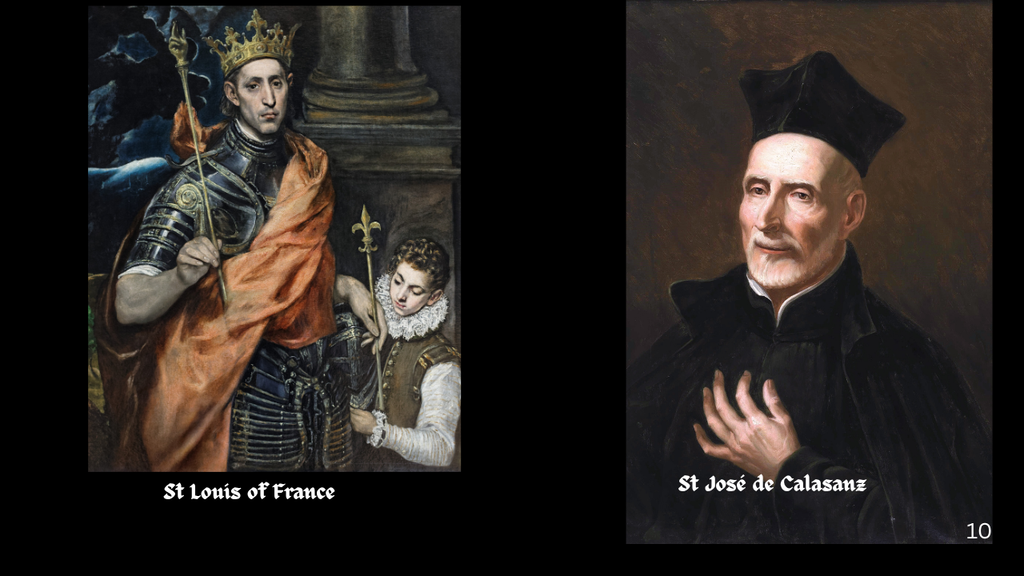
Saint of the day : San José de Calasanz, Priest
Saint of the day : Saint Louis of France, Monarch
Gospel Reading : Matthew 23:23-26
“Woe to you, scribes and Pharisees, hypocrites! for you tithe mint and dill and cummin, and have neglected the weightier matters of the law, justice and mercy and faith; these you ought to have done, without neglecting the others. You blind guides, straining out a gnat and swallowing a camel!
“Woe to you, scribes and Pharisees, hypocrites! for you cleanse the outside of the cup and of the plate, but inside they are full of extortion and rapacity. You blind Pharisee! first cleanse the inside of the cup and of the plate, that the outside also may be clean.
What do the Fathers say?
St JEROME. The Lord had commanded, that for the maintenance of the Priests and Levites, whose portion was the Lord, tithes of every thing should be offered in the temple. Accordingly, the Pharisees (to dismiss mystical expositions) concerned themselves about this alone, that these trifling things should be paid in, but lightly esteemed other things which were weighty. He charges them then with covetousness in exacting carefully the tithes of worthless herbs, while they neglected justice in their transactions of business, mercy to the poor, and faith toward God, which are weighty things.
PSEUDO-CHRYSOSTOM. Or, because these covetous Priests, when any one did not bring his tithes of the smallest thing, made it a matter of grave reprehension; but when one injured his neighbour or sinned against God, they were at no pains to reprove him, careful only of their own profit, neglecting the glory of God, and the salvation of men. For to observe righteousness, to do mercy, and to have faith, these things God commanded for His own glory; but the payment of tithes He established for the support of the Priests, so that the Priests should minister to the people in spiritual things, and the people supply the Priests with carnal things. Thus is it at this time, when all are careful of their own honour, none of God’s honour; they jealously protect their own rights, but will not bestow any pains in the service of the Church. If the people pay not their tithes duly, they murmur; but if they see the people in sin, they utter not a word against them. But because some of the Scribes and Pharisees, to whom He is now speaking, were of the people, it is not unsuitable to make a different interpretation; and ‘to tithe’ may be used as well of him who pays, as of him who receives, tithes. The Scribes then and Pharisees offered tithes of the very best things for the purpose of displaying their righteousness; but in their judgments they were unjust, without mercy for their brethren, without faith for the truth.
St REMIGIUS. In these words the Lord shews that all the commandments of the Law, greatest and least, are to be fulfilled. They also are refuted who give alms of the fruits of the earth, supposing that thus they cannot sin, whereas their alms profit them nothing unless they are careful to keep themselves from sin.
ORIGEN. This discourse instructs us that we should hasten to become righteous, not to seem so. For whoso seeks to be thought so, cleanses the outside, and has care of the things that are seen, but neglects the heart and conscience. But he who seeks to cleanse that which is within, that is, the thoughts, makes by that means the things that are without clean also. All professors of false doctrine are cups cleansed on the outside, because of that show of religion which they affect, but within they are full of extortion and guile, hurrying men into error.
The cup is a vessel for liquids, the platter for meat. Every discourse then of which we spiritually drink, and all speech by which we are fed, are vessels for meat and drink. They who study to set forth well wrought discourse rather than such as is full of healthful meaning, are cups cleansed without; but within full of the defilement of vanity. Also the letter of the Law and the Prophets is a cup of spiritual drink, and a platter of necessary food. The Scribes and Pharisees seek to make plain the outward sense; Christ’s disciples labour to exhibit the spiritual sense.
St HILARY. He therefore is reproving those who, pursuing an ostentation of useless scrupulosity, neglected the discharge of useful morality. For it is the inside of the cup that is used; if that be foul, what profit is it to cleanse the outside? And therefore what is needed is purity of the inner conscience, that those things which are of the body may be clean without.
PSEUDO-CHRYSOSTOM. Or, He means that the Jews whenever they were to enter the temple or to offer sacrifice, or on any festivals, used to wash themselves, their clothes, and their vessels, but none cleansed himself from his sins; but God neither commends bodily cleanliness, nor condemns the contrary. But suppose foulness of person or of vessels were offensive to God, which must become foul by being used, how much more does He not abhor foulness of conscience, which we may, if we will, keep ever pure?
Sources:
Bible readings from the Revised Standard Version of the Bible, Second Catholic Edition, copyright © 2006 National Council of the Churches of Christ in the USA
Quotes of the Fathers from :
Thomas Aquinas’ Catena Aurea Translated by St John Henry Newman
Artwork ex Wikimedia Commons