
The Soldier-Converts – Saints Nereus and Achilleus

- The History: According to the inscription written by Pope Damasus in the 4th century, Nereus and Achilleus were Roman soldiers (likely part of the Praetorian Guard) tasked with executing Christians.
- The Conversion: In a moment of sudden grace, they were terrified by the steadfastness of the martyrs. They threw down their weapons, discarded their military belts (cingulum), and confessed Christ.
- The Witness: They were exiled to the island of Terracina and eventually beheaded during the Diocletian persecution.
- Saints Nereus and Achilleus were buried in the Catacomb of Domitilla, which is located on the ancient Via Ardeatina in Rome.
- The Inscription of Pope Damasus (Translated from the Latin)
“The martyrs Nereus and Achilleus had enrolled themselves in the army and were performing their cruel duties…
Suddenly, they were converted; they fled, they left behind the impious camp of their leader, they threw away their shields, their armour, and their bloodstained javelins.
Confessing the faith of Christ, they rejoiced to give their testimony to His triumph.
From the words of Damasus, learn what great things the glory of Christ can achieve.” - Image: Domitilla with Nereus and Achilleus, by Peter Paul Rubens (1577–1640)
The Youthful Witness – Saint Pancras
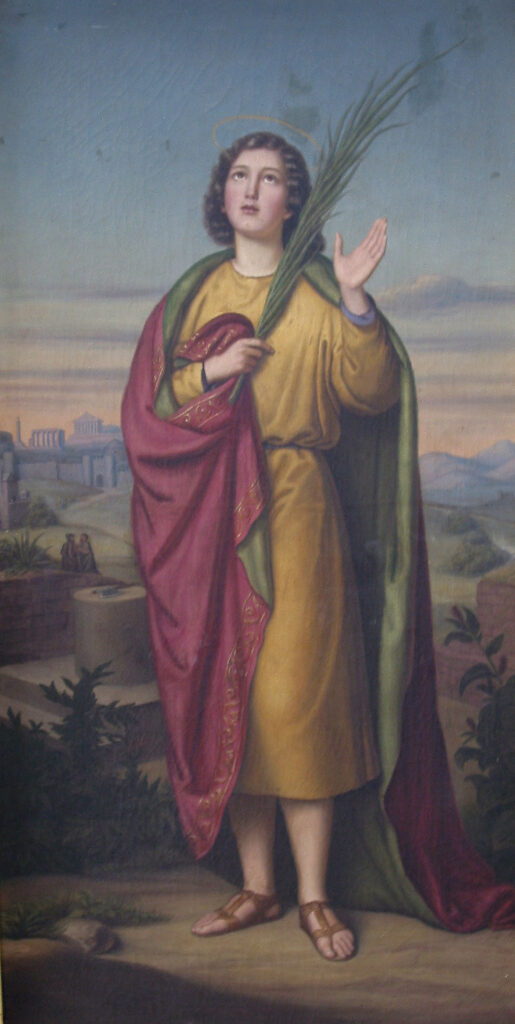
- The History: Pancras (Pancratius) was a 14-year-old orphan from Phrygia who traveled to Rome with his uncle. He arrived during the peak of the Diocletian persecution.
- The Witness: Legend says that Emperor Diocletian himself was impressed by the boy’s determination and offered him wealth to renounce Christ, but Pancras famously responded with a maturity beyond his years, rebuking the Emperor for mocking his youth.
- Execution: He was beheaded on the Via Aurelia. A Roman matron named Ottavilla recovered his body and buried it in the catacombs.
- The Patronage: In the early Church, Pancras became the patron of Truth and Oaths. It was believed that the innocence of his martyrdom made him a fierce judge of liars. For centuries, important oaths in Rome were sworn over his relics.
In the early medieval period, because Pancras was the “Avenger of Perjury,” the first thing a new Pope or high official often did was visit his basilica on the Via Aurelia. - Legacy in England: When Pope Gregory the Great sent St. Augustine of Canterbury to England in 597 AD, he gave him relics of St. Pancras.
- Image : Pankratius by Lambert Sachs (1818–1903)