Gospel Reading Matthew 6:24-34
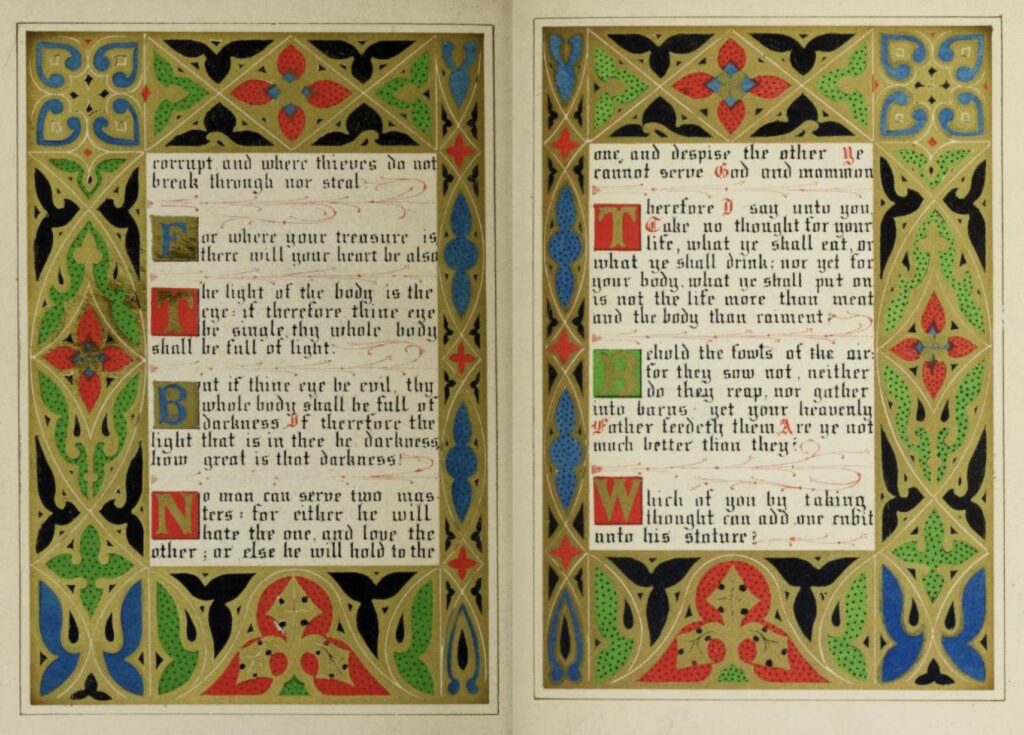
“No one can serve two masters; for either he will hate the one and love the other, or he will be devoted to the one and despise the other. You cannot serve God and mammon.
“Therefore I tell you, do not be anxious about your life, what you shall eat or what you shall drink, nor about your body, what you shall put on. Is not life more than food, and the body more than clothing?
Look at the birds of the air: they neither sow nor reap nor gather into barns, and yet your heavenly Father feeds them. Are you not of more value than they?
And which of you by being anxious can add one cubit to his span of life?
And why are you anxious about clothing? Consider the lilies of the field, how they grow; they neither toil nor spin; yet I tell you, even Solomon in all his glory was not arrayed like one of these.
But if God so clothes the grass of the field, which today is alive and tomorrow is thrown into the oven, will he not much more clothe you, O men of little faith?
Therefore do not be anxious, saying, ‘What shall we eat?’ or ‘What shall we drink?’ or ‘What shall we wear?’ For the Gentiles seek all these things; and your heavenly Father knows that you need them all.
But seek first his kingdom and his righteousness, and all these things shall be yours as well.
“Therefore do not be anxious about tomorrow, for tomorrow will be anxious for itself. Let the day’s own trouble be sufficient for the day.”
What do the Fathers say?
– The Lord had said before, that he that has a spiritual mind is able to keep his body free from sin; and that he who has not, is not able. Of this He here gives the reason, saying, No man can serve two masters.
– Bread may not be gained by carefulness of spirit, but by toil of body; and to them that will labour it abounds, God bestowing it as a reward of their industry; and is lacking to the idle, God withdrawing it as punishment of their sloth.
– For had He not willed that that which was should be preserved, He had not created it; but what He so created that it should be preserved by food, it is necessary that He give it food, as long as He would have it to be preserved.
– For God created all animals for man, but man for himself; therefore how much more precious is the creation of man, so much the greater is God’s care for him. If then the birds without toiling find food, shall man not find, to whom God has given both knowledge of labour and hope of fruitfulness?
– For it is God who day by day works the growth of your body, yourself not feeling it. If then the Providence of God works thus daily in your very body, how shall that same Providence withhold from working in necessaries of life?
– If God then thus provides for the flowers of the earth which only spring up, that they may be seen and die, shall He overlook men whom He has created not only to be seen for a time, but for ever?
– Those who do not believe that their lives are directed by God’s counsel, but follow uncertain chance, they accordingly fear and despair, as having no-one to guide them. But he who believes that he is guided by God’s counsel, entrusts his provision of food to God’s hand; as it follows, for your heavenly Father knows that you need them all.
– The kingdom of God is the reward of good works; His righteousness is the way of piety by which we go to that kingdom. If then you consider how great is the glory of the Saints, you will either through fear of punishment depart from evil, or through desire of glory hasten to good.
And if you consider what is the righteousness of God, what He loves, and what He hates, the righteousness itself will show you His ways, as it attends on those that love it. And the account we shall have to render is not whether we have been poor or rich, but whether we have done well or ill, which is in our own power.
Sources:
Bible readings from the Revised Standard Version of the Bible, Second Catholic Edition, copyright © 2006 National Council of the Churches of Christ in the USA
Quotes of the Fathers from Thomas Aquinas’ Catena Aurea Translated by St John Henry Newman
Artwork ex Wikimedia Commons