Gospel Reading : Matthew 16:13-19
Now when Jesus came into the district of Caesarea Philippi, he asked his disciples, “Who do men say that the Son of man is?”
And they said, “Some say John the Baptist, others say Elijah, and others Jeremiah or one of the prophets.”
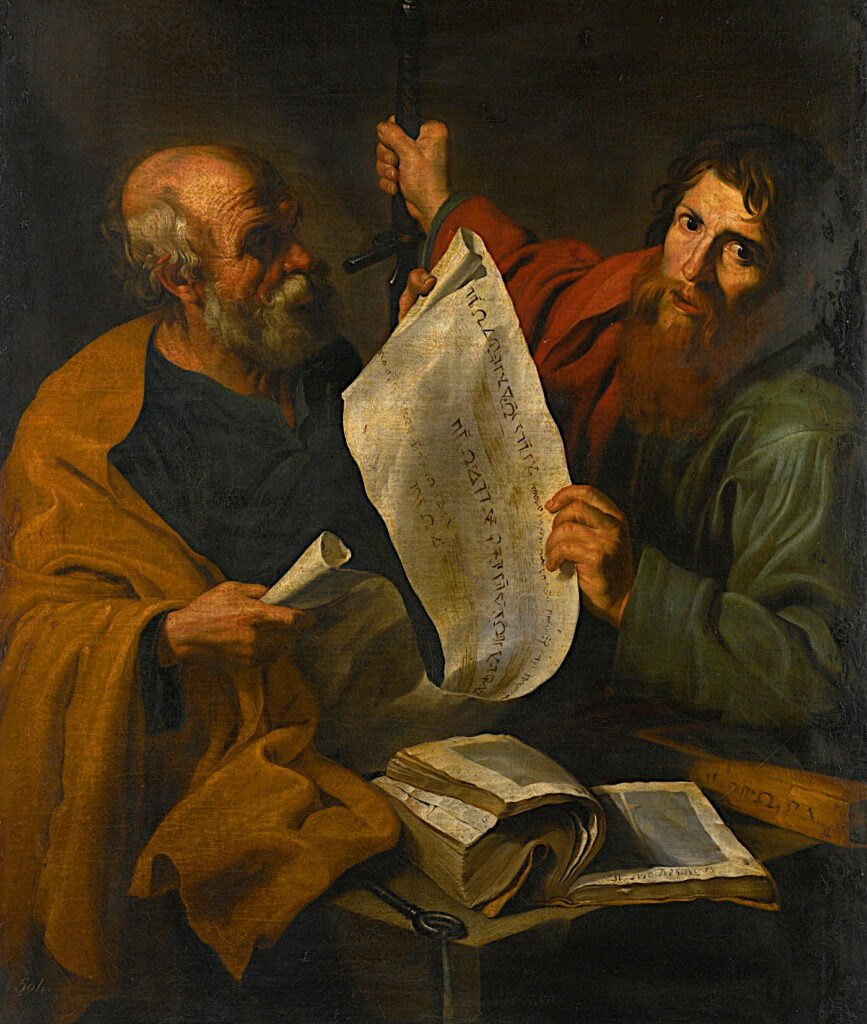
He said to them, “But who do you say that I am?” Simon Peter replied, “You are the Christ, the Son of the living God.”
And Jesus answered him, “Blessed are you, Simon Bar-Jona! For flesh and blood has not revealed this to you, but my Father who is in heaven. And I tell you, you are Peter, and on this rock I will build my church, and the powers of death shall not prevail against it.
I will give you the keys of the kingdom of heaven, and whatever you bind on earth shall be bound in heaven, and whatever you loose on earth shall be loosed in heaven.”
What do the Fathers say?
ORIGEN. Christ puts this question to His disciples, that from their answer we may learn that there were at that time among the Jews various opinions concerning Christ; and to the end that we should always investigate what opinion men may form of us; that if any ill be said of us, we may cut off the occasions of it; or if any good, we may multiply the occasions of it.
St JEROME. Beautifully is the question put, Who do men say that the Son of Man is? For they who speak of the Son of Man, are men: but they who understood His divine nature are called not men but Gods.
Observe how by this connection of the discourse the Apostles are not styled men but Gods. For after He had asked, Who do you say that the Son of Man is? He adds, Who do you say that I am? as much as to say, They being men think of Me as man, you who are Gods, who do you think I am?
St John CHRYSOSTOM. He says not, Who do the Scribes and Pharisees say that I am? but, Who do men say that I am? searching into the minds of the common people, which were not perverted to evil. For though their opinion concerning Christ was much below what it ought to have been, yet it was free from wilful wickedness; but the opinion of the Pharisees concerning Christ was full of much malice.
The disciples having recounted the opinion of the common people, He then by a second question invites them to higher thoughts concerning Him, and therefore it follows, Who do you say that I am? You who are with Me always, and have seen greater miracles than the multitudes, ought not to agree in the opinion of the multitudes. For this reason He did not put this question to them at the commencement of His preaching, but after He had done many signs; then also He spoke many things to them concerning His Deity.
St HILARY. By asking, Who do men say that the Son of Man is? He implied that something ought to be thought respecting Him beyond what appeared, for He was the Son of Man. And in thus enquiring after men’s opinion respecting Himself, we are not to think that He made confession of Himself; for that which He asked for was something concealed, to which the faith of believers ought to extend itself. We must hold that form of confession, that we so mention the Son of God as not to forget the Son of Man, for the one without the other offers us no hope of salvation; and therefore He said emphatically, Who do men say that the Son of Man is?
St RABANUS. He enquires the opinions of His disciples and of those without, not because He was ignorant of them; His disciples He asks, that He may reward with due reward their confession of a right faith, and the opinions of those without He enquires, that having the wrong opinions first set forth, it might be proved that the disciples had received the truth of their confession not from common opinion, but out of the hidden treasure of the Lord’s revelation.
ORIGEN. Peter denied that Jesus was any of those things which the Jews supposed, by his confession, Thou art the Christ, which the Jews were ignorant of; but he added what was more, the Son of the living God.
St HILARY. This is the true and unalterable faith, that from God came forth God the Son, who has eternity out of the eternity of the Father. That this God took unto Him a body and was made man is a perfect confession. Thus He embraced all in that He here expresses both His nature and His name, in which is the sum of virtues.
This confession of Peter’s met a worthy reward, for he had seen the Son of God in the man.
He is blessed, because to have looked and to have seen beyond human sight is to be praised, not beholding that which is of flesh and blood, but seeing the Son of God by the revelation of the heavenly Father; and so he was held worthy to be the first to acknowledge the divinity which was in Christ.
St JEROME. This return Christ makes to the Apostle for the testimony which Peter had spoken concerning Him, Thou art Christ, the Son of the living God. The Lord said unto him, Blessed art thou, Simon Bar-jonas? Why? Because flesh and blood has not revealed this to you, but My Father. That which flesh and blood could not reveal, was revealed by the grace of the Holy Spirit. By his confession then he obtains a title, which should signify that he had received a revelation from the Holy Spirit, whose son he shall also be called; for Bar-jonas signifies the son of a dove.
Flesh and blood has not revealed it to you meaning that not by the teaching of the Pharisees, but by the grace of God, Christ was revealed to him as the Son of God.
Sources:
Bible readings from the Revised Standard Version of the Bible, Second Catholic Edition, copyright © 2006 National Council of the Churches of Christ in the USA
Quotes of the Fathers from Thomas Aquinas’ Catena Aurea Translated by St John Henry Newman
Artwork ex Wikimedia Commons