
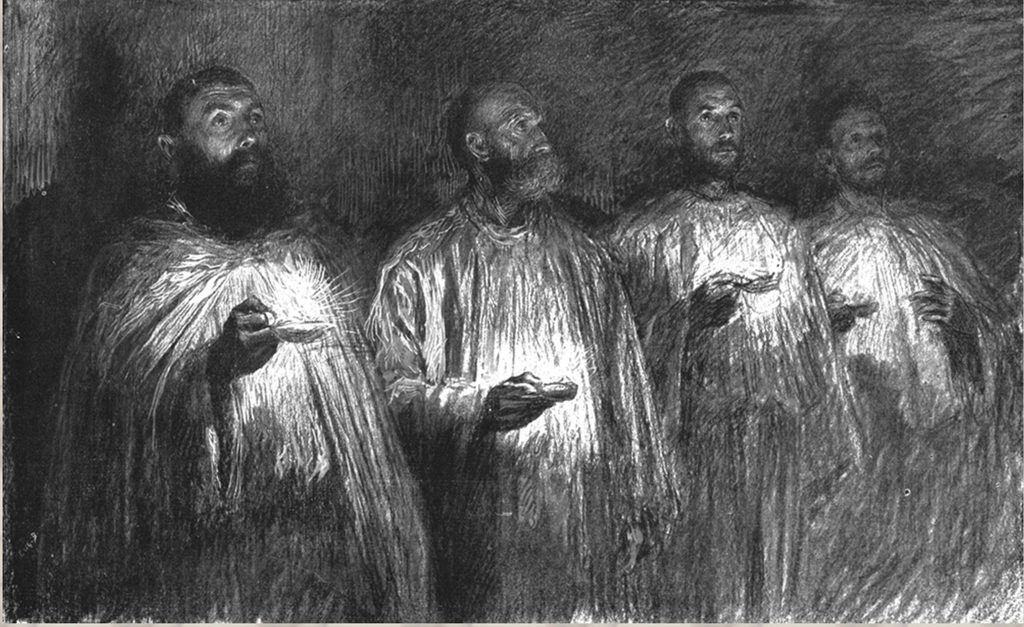
Gospel Reading : Luke 12:39-48
But know this, that if the householder had known at what hour the thief was coming, he would have been awake and would not have left his house to be broken into. You also must be ready; for the Son of man is coming at an hour you do not expect.”
Peter said, “Lord, are you telling this parable for us or for all?” And the Lord said, “Who then is the faithful and wise steward, whom his master will set over his household, to give them their portion of food at the proper time?
Blessed is that servant whom his master when he comes will find so doing. Truly, I tell you, he will set him over all his possessions.
But if that servant says to himself, ‘My master is delayed in coming,’ and begins to beat the menservants and the maidservants, and to eat and drink and get drunk, the master of that servant will come on a day when he does not expect him and at an hour he does not know, and will punish him, and put him with the unfaithful.
And that servant who knew his master’s will, but did not make ready or act according to his will, shall receive a severe beating. But he who did not know, and did what deserved a beating, shall receive a light beating.
Every one to whom much is given, of him will much be required; and of him to whom men commit much they will demand the more.
What do the Fathers say?
The above-mentioned parable relates to all the faithful in common, but now hear what suits the Apostles and teachers. For I ask, where will be found the steward, that possesses in himself faithfulness and wisdom?
In the management of goods, whether a man be careless yet faithful to his master, or else wise yet unfaithful, the things of the master perish; so also in the things of God there is need of faithfulness and wisdom. For I have known many servants of God, and faithful men, who because they were unable to manage ecclesiastical affairs, have destroyed not only possessions, but souls, exercising towards sinners indiscreet virtue by extravagant rules of penance or unseasonable indulgence.
Whosoever then has been found a faithful and wise steward, let him bear rule over the Lord’s household, that he may give them their portion of meat in due season, either the word of doctrine by which their souls are fed, or the example of works by which their life is fashioned.
Or, he will make him ruler over all that he has, not only over His own household, but that earthly things as well as heavenly shall obey him. As it was with Joshua the son of Nun, and Elias, the one commanding the sun, the other the clouds; and all the Saints as God’s friends use the things of God. Whosoever also passes his life virtuously, and has kept in due submission his servants, that is, anger and desire, supplies to them their portion of food in due season; to anger indeed that he may feel it against those who hate God, but to desire that he may exercise the necessary provision for the flesh, ordering it unto God. Such an one, I say, will be set over all things which the Lord has, being thought worthy to look into all things by the light of contemplation.
Now from not considering the time of our departure, there proceed many evils. For surely if we thought that our Lord was coming, and that the end of our life was at hand, we should sin the less. Hence it follows, And shall begin to strike the man servants and maidens, and to eat and drink and be drunken.
Rightly also shall the unbelieving steward receive his portion with the unbelievers, because he was without true faith.
Our Lord here points to something still greater and more terrible, for the unfaithful steward shall not only be deprived of the grace he had, so that it should profit him nothing in escaping punishment, but the greatness of his dignity shall the rather become a cause of his condemnation. And that servant who knew his master’s will, but did not make ready or act according to his will, shall receive a severe beating.
Here some object, saying, He is deservedly punished who, knowing the will of His Lord, pursues it not; but why is the ignorant punished? Because when he might have known, he would not, for being himself slothful, was the cause of his own ignorance.
But he goes on to show why teachers and learned men deserve a more severe punishment, as it is said, Every one to whom much is given, of him will much be required;. Teachers indeed are given the grace to perform miracles, but entrusted the grace of speech and learning. But not in that which is given, He says, is any thing more to be sought, but in that which is entrusted or deposited; for the grace of the word needs increase. But from a teacher more is required, for he should not lie idle, but improve the talent of the word.
The Venerable BEDE. All must live soberly, piously, and justly, who wait for a blessed hope, and the judgment will to each and all be unexpected. It therefore remains to be supposed, that knowing these two things, Peter asked about that which he might not know, namely, whether those sublime commands of a heavenly life in which He bade us sell what we have and provide bags which wax not old, and watch with our loins girded, and lamps burning, belonged to the Apostles only, and those like them, or to all who were to be saved.
Sources:
Bible readings from the Revised Standard Version of the Bible, Second Catholic Edition, copyright © 2006 National Council of the Churches of Christ in the USA
Quotes of the Fathers from
Thomas Aquinas’ Catena Aurea Translated by St John Henry Newman
Artwork ex Wikimedia Commons\