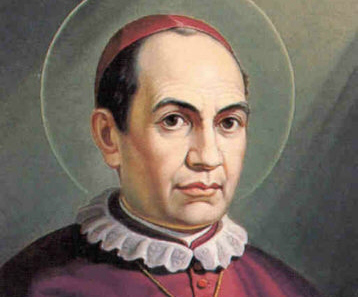
Saint of the day : Saint Anthony Mary Claret, Bishop
24 October
Constant prayer is not like a single violent blow, but like the drop of water that, falling slowly and perseveringly, hollows out the hard stone. Thus, the devout repetition of the Hail Marys in the Most Holy Rosary is not empty repetition, but continuous watering that softens the hardness of the heart, extinguishes the embers of anger, and causes the virtues of humility, patience, and charity to spring forth. – Saint Anthony Mary Claret
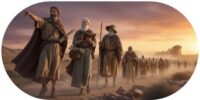
Gospel Reading : Luke 13:1-9
There were some present at that very time who told him of the Galileans whose blood Pilate had mingled with their sacrifices. And he answered them, “Do you think that these Galileans were worse sinners than all the other Galileans, because they suffered thus? I tell you, No; but unless you repent you will all likewise perish.
Or those eighteen upon whom the tower in Silo′am fell and killed them, do you think that they were worse offenders than all the others who dwelt in Jerusalem? I tell you, No; but unless you repent you will all likewise perish.”
And he told this parable: “A man had a fig tree planted in his vineyard; and he came seeking fruit on it and found none.
And he said to the vinedresser, ‘Lo, these three years I have come seeking fruit on this fig tree, and I find none. Cut it down; why should it use up the ground?’
And he answered him, ‘Let it alone, sir, this year also, till I dig about it and put on manure. And if it bears fruit next year, well and good; but if not, you can cut it down.’”
What do the Fathers say?
St CYRIL OF ALEXANDRIA. For these were followers of the opinions of Judas of Galilee, who said, that we ought to call no man master. Great numbers of them refusing to acknowledge Cæsar as their master, were therefore punished by Pilate.
They said also that men ought not to offer God any sacrifices that were not ordained in the law of Moses, and so forbade to offer the sacrifices appointed by the people for the safety of the Emperor and the Roman people.
Pilate then, being enraged against the Galilæans, ordered them to be slain in the midst of the very victims which they thought they might offer according to the custom of their law; so that the blood of the offerers was mingled with that of the victims offered.
Now it being generally believed that these Galilæans were most justly punished, as sowing offences among the people, the rulers, eager to excite against Him the hatred of the people, relate these things to the Saviour, wishing to discover what He thought about them.
But He, admitting them to be sinners, does not however judge them to have suffered such things, as though they were worse than those who suffered not. Whence it follows, And he answered and said to them, “Do you think that these Galileans were worse sinners than all the other Galileans, because they suffered thus? “
To save therefore the multitudes, from the intestine seditions, which were excited for the sake of religion, He adds, but unless you repent, and unless you cease to conspire against your rulers, for which you have no divine guidance, you shall all likewise perish, and your blood shall be united to that of your sacrifices..
St John CHRYSOSTOM. And herein he shows that He permitted them to suffer such things, that the heirs of the kingdom yet living might be dismayed by the dangers of others.
“What then,” you will say, “is this man punished, that I might become better?” No, but he is punished for his own crimes, and hence arises an opportunity of salvation to those who see it.
The Venerable BEDE. But because they repented not – in the fortieth year of our Lord’s Passion, the Romans coming, (whom Pilate represented, as belonging to their nation,) and beginning from Galilee, (where our Lord’s preaching had begun,) utterly destroyed that wicked nation, and defiled with human blood not only the courts of the temples, where they were wont to offer sacrifies, but also the inner parts of the doors, (where there was no entrance to the Galileans.)
For Pilate, who is interpreted, “The mouth of the hammerer,” signifies the devil ever ready to strike. The blood expresses sin, the sacrifices good actions. Pilate then mingles the blood of the Galilæans with their sacrifices when the devil stains the alms and other good works of the faithful either by carnal indulgence, or by courting the praise of men, or any other defilement.
Those men of Jerusalem also who were crushed by the falling of the tower, signify that the Jews who refuse to repent will perish within their own walls. Nor without meaning is the number eighteen given, (which number among the Greeks is made up of Ι and Η, that is, of the same letters with which the name of Jesus begins.) And it signifies that the Jews were chiefly to perish, because they would not receive the name of the Saviour. That tower represents Him who is the tower of strength. And this is rightly in Siloam, which is interpreted, “sent;” for it signifies Him who, sent by the Father, came into the world, and who shall grind to powder all on whom He falls.
St AMBROSE. There was a vineyard of the Lord of hosts, which He gave for a spoil to the Gentiles. And the comparison of the fig tree to the synagogue is well chosen, because as that tree abounds with wide and spreading foliage, and deceives the hopes of its possessor with the vain expectation of promised fruit, so also in the synagogue, while its teachers are unfruitful in good works, yet magnify themselves with words as with abundant leaves, the empty shadow of the law stretches far and wide.
This tree also is the only one which puts forth fruit in place of flowers. And the fruit falls, that other fruit may succeed; yet some few of the former remain, and do not fall. For the first people of the synagogue fell off as a useless fruit, in order that out of the fruitfulness of the old religion might arise the new people of the Church; yet they who were the first out of Israel whom a branch of a stronger nature bore, under the shadow of the law and the cross, in the bosom of both, stained with a double juice after the example of a ripening fig, surpassed all others in the grace of most excellent fruits; to whom it is said, You shall sit upon twelve thrones.
But our Lord sought, not because He was ignorant that the fig tree had no fruit, but that He might show in a figure that the synagogue ought by this time to have fruit.
Lastly, from what follows, He teaches that He Himself came not before the time who came after three years. For so it is said, Then said he to the dresser of the vineyard, Behold, these three years I come seeking fruit on this fig tree, and find none.
He came to Abraham, He came to Moses, He came to Mary, that is, He came in the seal of the covenant, He came in the law, He came in the body. We recognise His coming by His gifts; at one time purification, at another sanctification, at another justification. Circumcision purified, the law sanctified, grace justified.
The Jewish people then could not be purified because they had not the circumcision of the heart, but of the body; nor be sanctified, because ignorant of the meaning of the law, they followed carnal things rather than spiritual; nor justified, because not working repentance for their offences, they knew nothing of grace.
Rightly then was there no fruit found in the synagogue, and consequently it is ordered to be cut down; for it follows, Cut it down; why should it use up the ground?’ But the merciful dresser, perhaps meaning him on whom the Church is founded, foreseeing that another would be sent to the Gentiles, but he himself to them who were of the circumcision, piously intercedes that it may not be cut off; trusting to his calling, that the Jewish people also might be saved through the Church. Hence it follows, And he answering said unto him, Lord, let it alone this year also. He soon perceived hardness of heart and pride to be the causes of the barrenness of the Jews. He knew therefore how to discipline, who knew how to censure faults. Therefore adds He, till I shall dig about it. He promises that the hardness of their hearts shall be dug about by the Apostles’ spades, lest a heap of earth cover up and obscure the root of wisdom. And He adds, put on manure. that is, by the grace of humility, by which even the fig is thought to become fruitful toward the Gospel of Christ. Hence He adds, And if it bears fruit next year, well and good; but if not, you can cut it down.’”
Sources:
Bible readings from the Revised Standard Version of the Bible, Second Catholic Edition, copyright © 2006 National Council of the Churches of Christ in the USA
Quotes of the Fathers from
Thomas Aquinas’ Catena Aurea Translated by St John Henry Newman
Artwork ex Wikimedia Commons