23 October
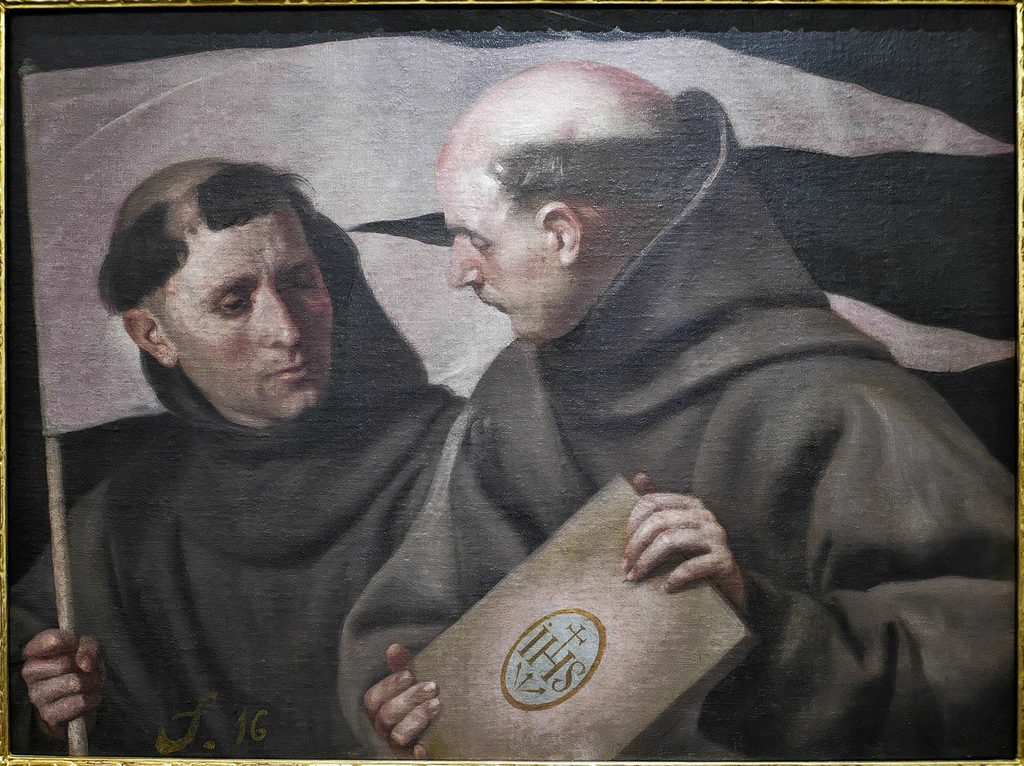
Saint John of Capistrano (1386–1456) was an Italian Franciscan priest, renowned preacher, theologian, and military chaplain often referred to as the “Soldier Saint.”
His feast day is celebrated on October 23 (formerly October 28 in the pre-1969 calendar).
Key Life & Ministry
- Early Career in Law & Government: Born in Capestrano, Abruzzo, he studied law in Perugia and became a successful magistrate and governor of the city. During a political imprisonment, he experienced a deep spiritual conversion, resolved his marriage, and entered the Franciscan Order (Friars Minor) in 1416 at age 30.
- Franciscan Reformer & Preacher: Alongside St. Bernardino of Siena, he was a key figure in the Observant movement within the Franciscan Order, which sought a return to the strict, original rule of St. Francis. He became one of the most famous itinerant preachers of 15th-century Europe, drawing massive crowds across Italy, Germany, Austria, Poland, and Hungary.
- The Defense of Belgrade (1456): At age 70, following the Fall of Constantinople (1453), Pope Callixtus III commissioned Capistrano to preach a crusade against the invading Ottoman forces under Sultan Mehmed II. He marched into Hungary, rallied a peasant army, and joined John Hunyadi at the Siege of Belgrade. His spiritual leadership and presence on the battlefield were credited with helping turn the tide of the battle, repelling the siege.
He died a few months after the victory, on October 23, 1456, from the plague that broke out in the army camp. He was canonized in 1690 by Pope Alexander VIII.
Theology & Iconography
- Name of Jesus Devotion: Like St. Bernardino of Siena, Capistrano was a prominent promoter of the IHS Monogram (representing the Holy Name of Jesus) set within a radiating sunburst.
- Patronage: He is the patron saint of military chaplains, jurists, and the city of San Juan Capistrano in California (founded by Franciscan missionaries in 1776).
- a significant body of Saint John of Capistrano’s homiletic material, sermon notes, and complete treatises derived from his preaching campaigns have survived and are preserved in various archives and libraries across Europe.
- In the late 15th and 16th centuries, many of his sermon collections were compiled and published in early printed editions (incunabula):
Sermones Quadragesimales(Lenten Sermons): Extensive series of sermons focused on repentance, moral reform, justice, and the Passion of Christ, structured around the daily Lenten readings.De Judicio Universali(Sermons on the Last Judgment): A thematic collection addressing eschatology, personal accountability, and the Four Last Things, which formed a central part of his popular preaching.Sermones de Sanctis(Sermons on the Saints): Homilies focused on feast days, the lives of the saints, and the virtues of the Virgin Mary.De Nomine Jesu(Sermons on the Holy Name of Jesus): Preaching scripts co-authored or adapted alongside St. Bernardino of Siena, promoting devotion to the IHS monogram.
Sources:
Wikipedia
Artwork ex Wikimedia Commons\