
Memorial of St Anselm of Canterbury, Archbishop
– 21 April 2026
St Anselm of Canterbury (1033-1109)
“A great Saint of the Middle Ages, the founder of scholastic theology, to whom Christian tradition has given the title: “Magnificent Doctor”, because he fostered an intense desire to deepen his knowledge of the divine Mysteries but in the full awareness that the quest for God is never ending, at least on this earth.”
– (Extract from Pope Benedict XVI’s general audience 23 September 2009)

Childhood and Education:
St Anselm was born in 1033 in Aosta, the first child of a noble family.
His father, Gundulf was a coarse man dedicated to the pleasures of life who squandered his possessions.
On the other hand, his mother, Ermenberga, was devout and provided his early religious formation. She subsequently entrusted him to the Benedictines at a priory in Aosta.
At the age of 15, he asked to be admitted to the Benedictine Order but his father would not give his permission.
After the premature death of his mother, Anselm’s relationship with his father deteriorated so badly that he fled across the Alps into France.
The Search: He spent three years wandering through Burgundy and France, seeking meaning for his life, eventually arriving at the Abbey of Bec in Normandy attracted by the fame of Lanfranc of Pavia, the Prior. Under Lanfranc’s guidance Anselm energetically resumed his studies.
Ordination and Promotion
His monastic vocation was rekindled and, at the age of 27 he entered the monastic order and was ordained a priest.
When Lanfranc became Abbot of Caen in 1063, Anselm, after barely three years of monastic life, was named Prior of the Monastery of Bec and teacher of the cloister school, showing his gifts as a refined educator.
Upon the death of Abbot Herluin, the founder of the Abbey of Bec, in 1079, Anselm was unanimously elected to succeed him.
It was during this time that Anselm wrote his most famous works: The Monologion and The Proslogion.
Canterbury: When Lanfranc of Pavia, Abbot of Caen, became the new Archbishop of Canterbury. He asked Anselm to join him and help him in the difficult plight in which his ecclesiastical community had been left after the Norman conquest. When Lanfranc died Anselm was chosen to succeed him in the archiepiscopal See of Canterbury. He received his solemn episcopal consecration in December 1093.
Political Strife :
Anselm immediately became involved in a strenuous struggle for the Church’s freedom. Anselm defended the Church from undue interference by political authorities, especially King William Rufus and Henry I. He always showed courageous and cordial fidelity to the pontiff who encouraged and supported him.
In 1103, this fidelity cost him the bitterness of exile from his See of Canterbury.
In 1106, when King Henry I renounced his right to confer ecclesiastical offices, as well as to the collection of taxes and the confiscation of Church properties, Anselm was able to return to England, where he was warmly welcomed by the clergy and the people. Thus the long battle he had fought with the weapons of perseverance, pride and goodness ended happily.
While in exile in Italy, he finished Cur Deus Homo (“Why God Became Man”), arguably the most influential work on the theology of the Atonement in Western history.
Final Years:
This holy Archbishop, who roused such deep admiration wherever he went, dedicated the last years of his life to the moral formation of the clergy and to intellectual research into theological topics. He died on 21 April 1109.
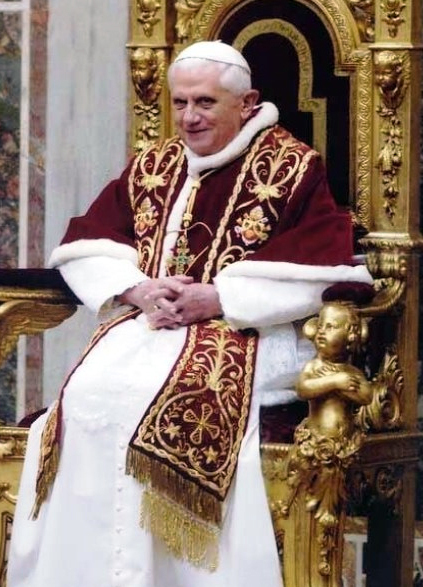
“I pray, O God, to know you, to love you, that I may rejoice in you. And if I cannot attain to full joy in this life may I at least advance from day to day, until that joy shall come to the full” (Proslogion, chapter 14).
This prayer enables us to understand the mystical soul of this great Saint of the Middle Ages, the founder of scholastic theology, to whom Christian tradition has given the title: “Magnificent Doctor”, because he fostered an intense desire to deepen his knowledge of the divine Mysteries but in the full awareness that the quest for God is never ending, at least on this earth.
The clarity and logical rigour of his thought always aimed at “raising the mind to contemplation of God” (ibid., Proemium). He states clearly that whoever intends to study theology cannot rely on his intelligence alone but must cultivate at the same time a profound experience of faith.
In this regard his famous words remain more useful than ever, even today, for healthy theological research and for anyone who wishes to deepen his knowledge of the truths of faith: “I do not endeavour, O Lord, to penetrate your sublimity, for in no wise do I compare my understanding with that; but I long to understand in some degree your truth, which my heart believes and loves. For I do not seek to understand that I may believe, but I believe in order to understand. For this also I believe, that unless I believed, I should not understand” (ibid., 1).
Dear brothers and sisters, may the love of the truth and the constant thirst for God that marked St Anselm’s entire existence be an incentive to every Christian to seek tirelessly an ever more intimate union with Christ, the Way, the Truth and the Life. In addition, may the zeal full of courage that distinguished his pastoral action and occasionally brought him misunderstanding, sorrow and even exile be an encouragement for Pastors, for consecrated people and for all the faithful to love Christ’s Church, to pray, to work and to suffer for her, without ever abandoning or betraying her. May the Virgin Mother of God, for whom St Anselm had a tender, filial devotion, obtain this grace for us. “Mary, it is you whom my heart yearns to love”, St Anselm wrote, “it is you whom my tongue ardently desires to praise”.
(Extract from Pope Benedict XVI’s general audience 23 September 2009)