Gospel Reading : Matthew 9:36—10:8
When he saw the crowds, he had compassion for them, because they were harassed and helpless, like sheep without a shepherd. Then he said to his disciples, “The harvest is plentiful, but the labourers are few; pray therefore the Lord of the harvest to send out labourers into his harvest.”
And he called to him his twelve disciples and gave them authority over unclean spirits, to cast them out, and to heal every disease and every infirmity.
The names of the twelve apostles are these: first, Simon, who is called Peter, and Andrew his brother; James the son of Zebedee, and John his brother; Philip and Bartholomew; Thomas and Matthew the tax collector; James the son of Alphaeus, and Thaddaeus; Simon the Cananaean, and Judas Iscariot, who betrayed him.
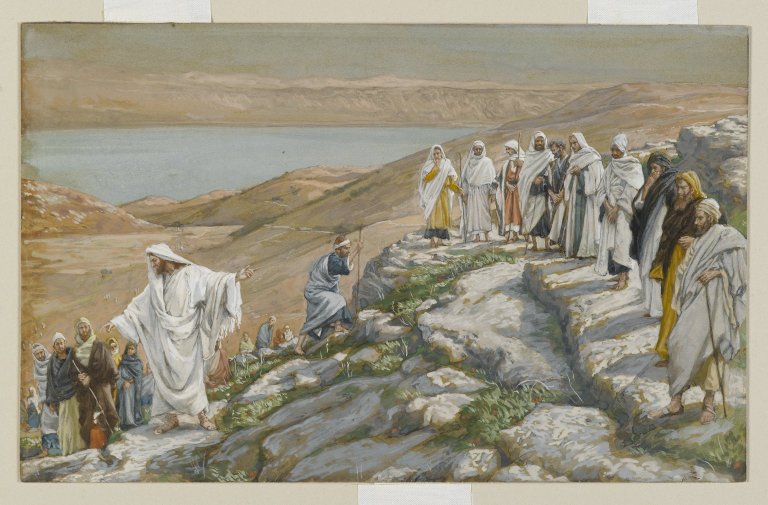
These twelve Jesus sent out, charging them, “Go nowhere among the Gentiles, and enter no town of the Samaritans, but go rather to the lost sheep of the house of Israel. And preach as you go, saying, ‘The kingdom of heaven is at hand.’ Heal the sick, raise the dead, cleanse lepers, cast out demons. You received without pay, give without pay.

What do the Fathers say?
St JEROME. Observe how equally in villages, cities, and towns, that is to great as well as small, He preaches the Gospel, not respecting the might of the noble, but the salvation of those that believe. It follows, Teaching in their synagogues; this was His meat, going about to do the will of His Father, and saving by His teaching such as yet believed not.
He first preached and taught, and then proceeded to heal sicknesses, that the works might convince those who would not believe the words. Hence it follows, Healing every sickness and every disease, for to Him alone nothing is impossible.
St REMIGIUS. It should be known that those whom He healed outwardly in their bodies, He also healed inwardly in their souls. Others cannot do this of their own power, but can by God’s grace.
When the Son of God looked down from heaven upon the earth, to hear the groans of the captives, straight away a great harvest began to ripen; for the multitude of the human race would never have come near to the faith, had not the Author of human salvation looked down from heaven; and it follows, Then said he unto his disciples, The harvest truly is great, but the labourers are few.
For the number of the Apostles was small in comparison of so great crops to be reaped. The Lord exhorts His preachers, that is, the Apostles and their followers, that they should daily desire an increase of their number; Pray ye therefore the Lord of the harvest, that he would send forth labourers into his harvest.
St HILARY. Figuratively; When salvation was given to the Gentiles, then all cities and towns were enlightened by the power and entrance of Christ, and escaped every former sickness and infirmity. The Lord pities the people troubled with the violence of the unclean Spirit, and sick under the burden of the Law, and having no shepherd at hand to bestow on them the guardianship of the Holy Spirit. But of that gift there was a most abundant fruit, whose plenty far exceeded the multitude of those that drank thereof; how many soever take of it, yet an inexhaustible supply remains; and because it is profitable that there should be many to minister it, He bids us ask the Lord of the harvest, that God would provide a supply of reapers for the ministration of that gift of the Holy Spirit which was made ready; for by prayer this gift is poured out upon us from God.
St AUGUSTINE. These therefore He chose for His disciples, whom also He named Apostles, humbly born without honour, without learning, that whatever they should do that was great, it was He that should be in them and should do it. He had among them one that was evil, whom He should use in the accomplishment of His Passion, and who should be an example to His Church of suffering evil men.
Sources:
Bible readings from the Revised Standard Version of the Bible, Second Catholic Edition, copyright © 2006 National Council of the Churches of Christ in the USA
Quotes of the Fathers from Thomas Aquinas’ Catena Aurea Translated by St John Henry Newman
Artwork ex Wikimedia Common