Gospel Reading :John 20:24-29
Now Thomas, one of the twelve, called the Twin, was not with them when Jesus came. So the other disciples told him, “We have seen the Lord.” But he said to them, “Unless I see in his hands the print of the nails, and place my finger in the mark of the nails, and place my hand in his side, I will not believe.”
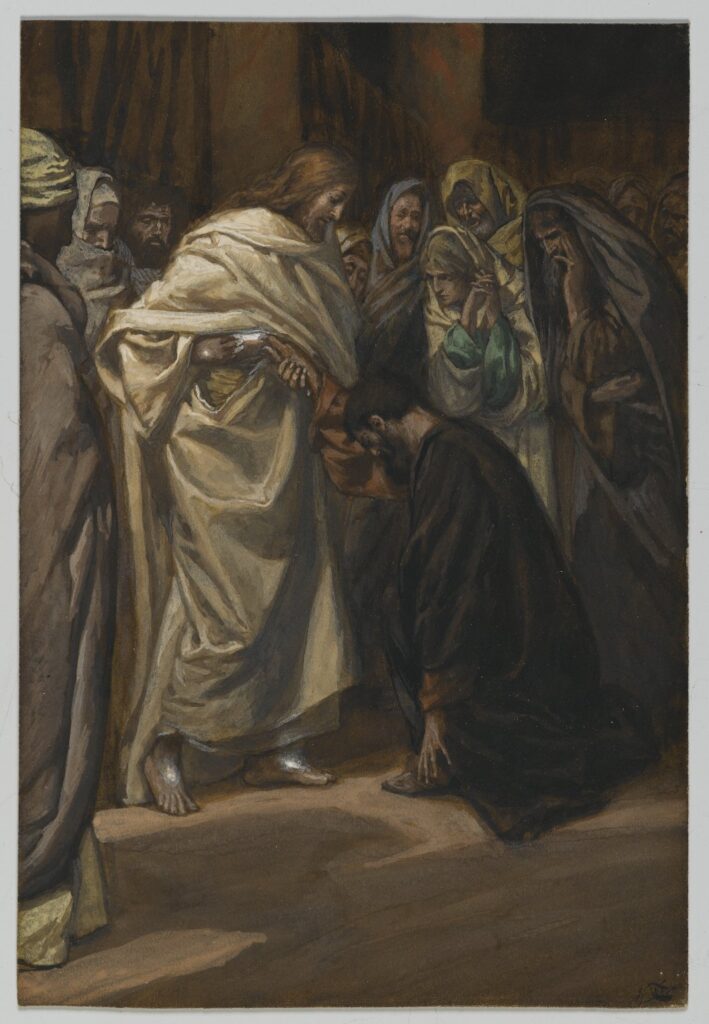
Eight days later, his disciples were again in the house, and Thomas was with them. The doors were shut, but Jesus came and stood among them, and said, “Peace be with you.” Then he said to Thomas, “Put your finger here, and see my hands; and put out your hand, and place it in my side; do not be faithless, but believing.”
Thomas answered him, “My Lord and my God!”
Jesus said to him, “Have you believed because you have seen me? Blessed are those who have not seen and yet believe.”
What do the Fathers say?
Pope St GREGORY the Great. It was not an accident that that particular disciple was not present. The Divine mercy ordained that a doubting disciple should, by feeling in his Master the wounds of the flesh, heal in us the wounds of unbelief. The unbelief of Thomas is more profitable to our faith, than the belief of the other disciples; for, the touch by which he is brought to believe, confirming our minds in belief, beyond all question.
St John CHRYSOSTOM. When the Apostle said, We have seen the Lord, Thomas did not believe, not because he discredited them, but from an idea of the impossibility of the thing itself:
So he said to them, Except I shall see in His hands the print of the nails, and put my finger into the print of the nails, and thrust my hand into His side, I will not believe.
He required the evidence of the grossest sense, viz. the touch, and would not even believe his eyes: for he does not say only, Except I shall see, but adds, and put my finger into the print of the nails, and thrust my hand into His side.
Consider the mercy of the Lord, how for the sake of one soul, He exhibits His wounds. Because one person, Thomas, wanted to examine Him, Christ allowed him. But He did not appear to him immediately, but waited till the eighth day, in order that the admonition being given in the presence of the disciples, might kindle in him greater desire, and strengthen his faith for the future.
And to show that He had heard what Thomas had said to the disciples, He uses the same words. And first He rebukes him; “Look at my hands, and place your finger here; and bring your hand close, and place it at my side. : secondly, He admonishes him; And do not choose to be unbelieving, but believe.”
Note how that before they receive the Holy Spiritt faith wavers, but afterward is firm.
We may also wonder how an incorruptible body could retain the marks of the nails. But it was done in condescension; in order that they might be sure that it was the very person Who was crucified.
St AUGUSTINE. He might, had He pleased, have wiped all spot and trace of wound from His glorified body; but He had reasons for retaining them. He showed them to Thomas, who would not believe unless he saw and touched; and He will show them to His enemies, not to say, as He did to Thomas, Because you have seen, you have believed, but to convict them: Behold the Man whom you crucified, see the wounds which you inflicted, recognise the side which you pierced, that it was by you, and for you, that it was opened, and yet you cannot enter there.
Thomas saw and touched the man, and confessed the God whom he neither saw nor touched. By means of the one he believed the other undoubtingly.
Pope St GREGORY the Great. Our Lord gave that flesh to be touched which He had introduced through shut doors: wherein two wonderful, and, according to human reason, contradictory things appear, viz. that after the resurrection He had a body incorruptible, and yet palpable. For that which is palpable must be corruptible, and that which is incorruptible must be impalpable. But He showed Himself incorruptible and yet palpable, to prove that His body after His resurrection was the same in nature as before, but different in glory.
St THEOPHYLACT. He who had been before unbelieving, after touching the body showed himself the best witness; for he asserted the twofold nature and one Person of Christ; by saying, My Lord, the human nature, by saying, My God, the divine, and by joining them both, confessed that one and the same Person was Lord and God.
Pope St GREGORY the Great. But when the Apostle says, Faith is the substance of things hoped for, the evidence of things not seen, (Heb. 11:1) it is plain that things which are seen, are objects not of faith, but of knowledge.
Why then is it said to Thomas who saw and touched, Because you have seen Me, you have believed? Because he saw one thing, believed another; saw the man, confessed the God.
But what follows is very gladdening; Blessed are they that have not seen, and yet have believed. In which sentence we are especially included, who have not seen Him with the eye, but retain Him in the mind, provided we only develope our faith in good works. For he only really believes, who practises what he believes.
Sources:
Bible readings from the Revised Standard Version of the Bible, Second Catholic Edition, copyright © 2006 National Council of the Churches of Christ in the USA
Quotes of the Fathers from Thomas Aquinas’ Catena Aurea Translated by St John Henry Newman
Artwork ex Wikimedia Commons