Saints of the day : Saints Cornelius, Pope and Cyprian, Bishop, Martyrs
The Memorial of Saints Cornelius, Pope, and Cyprian, Bishop, Martyrs honours two pivotal 3rd-century leaders whose theological alliance forged the Early Church’s understanding of pastoral mercy, penance, and ecclesial unity during intense Roman persecutions.
During the Decian Persecution (250–251 AD), Roman Emperor Decius required all citizens to offer sacrifices to the imperial gods and obtain a certificate (libellus). Thousands of Christians yielded under torture or threat of death. When the persecution subsided, the Church faced an unprecedented pastoral crisis regarding the lapsi (the “lapsed” Christians who had denied the faith or faked certificates):
- The Rigorist Faction: Led by the Roman priest Novatian (who set himself up as Antipope), this group argued that apostasy was an unforgivable sin. They insisted the Church had no authority to readmit the lapsi, even on their deathbeds.
- The Pastoral Faction (Cornelius & Cyprian): Pope Cornelius and Bishop Cyprian advocated for a middle path between total laxity and unyielding severity. They established that after performing tailored, sincere public penance, the lapsi could be reconciled and readmitted to Holy Communion.
Pope St. Cornelius
| He was Bishop of Rome from 251–253 AD, Elected after a 14-month vacant papal see due to persecution. He convened a Roman synod of 60 bishops that condemned Novatianism and affirmed the Church’s power to forgive post-baptismal sins. He was arrested under Emperor Gallus and banished to Centumcellae (Civitavecchia), where he died in exile/martyrdom in 253 AD. He is buried in the Catacombs of Saint Callixtus. |
St. Cyprian of Carthage
| He was Bishop of Carthage (c. 249–258 AD) He was a Master orator, theologian, and first bishop-martyr of North Africa. He authored De Catholicae Ecclesiae Unitate (On the Unity of the Catholic Church), establishing the theological foundation for the authority of bishops. He was beheaded outside Carthage on September 14, 258 AD, under Emperor Valerian, famously responding “Deo gratias” (“Thanks be to God”) upon hearing his sentence |
Gospel Reading : John 17:11b-19
Father most holy, preserve them in your name, those whom you have given to me, so that they may be one, even as we are one.
While I was with them, I preserved them in your name. I have guarded those whom you have given to me, and not one of them is lost, except the son of perdition, so that the Scripture may be fulfilled.
And now I am coming to you. But I am speaking these things in the world, so that they may have the fullness of my joy within themselves.
I have given them your word, and the world has hated them. For they are not of the world, just as I, too, am not of the world.
I am not praying that you would take them out of the world, but that you would preserve them from evil.
They are not of the world, just as I also am not of the world.
Sanctify them in truth. Your word is truth.
Just as you have sent me into the world, I also have sent them into the world.
And it is for them that I sanctify myself, so that they, too, may be sanctified in truth.
What do the Fathers say?
St CYPRIAN of Carthage. When our Lord was praying to the Father on our behalf, He added, saying: ‘Father most holy, preserve them in your name, those whom you have given to me, so that they may be one, even as we are one.’ [John 17:11b]… If Christ, who bore our sins, prayed for us so earnestly that we might remain one, how much more ought we to strive to preserve that unity?
St AUGUSTINE. It is sufficiently apparent from this, that all things which the Father has, the Only-Begotten Son has; has in that He is God, born from the Father, and equal with the Father;
Since this is God the Father’s, it could not at the same time be God the Son’s, unless the Son were equal to the Father. For it is impossible that saints, of whom this is said, should be the property of any one, except Him who created and sanctified them. When He says above in speaking of the Holy Spirit, All things that the Father has are Mine, (c. 16:15)
He means all things which pertain to the divinity of the Father; for He adds, He (the Holy Spirit) shall receive of Mine; and the Holy Spirit would not receive from a creature which was subject to the Father and the Son.
He does not say, That I and they may be one, though He might have said so in the sense, that He was the head of the Church, and the Church His body; not one thing, but one person: the head and the body being one Christ.
But showing that His divinity is consubstantial with the Father, He prays that His people may in like manner be one; but one in Christ, not only by the same nature, in which mortal man is made equal to the Angels, but also by the same will, agreeing most entirely in the same mind, and melted into one Spirit by the fire of love.
This is the meaning of, so that they may be one, even as we are one: viz. that as the Father and the Son are one not only by equality of substance, but also in will, so they, meaning his followers, may be one not only by the union of nature, but by the union of love.
The Son as man kept His disciples in the Father’s name, being placed among them in human form: the Father again kept them in the Son’s name, in that He heard those who asked in the Son’s name. But we must not take this carnally, as if the Father and Son kept us in turns, for the Father, Son, and Holy Spirit guard us at the same time: but Scripture does not raise us, except it stoop to us.
Let us understand then that when our Lord says this, He is distinguishing the persons, not dividing the nature, so that when the Son was keeping His disciples by His bodily presence, the Father was waiting to succeed Him on His departure; but both kept them by spiritual power, and when the Son withdrew His bodily presence, He still held with the Father the spiritual keeping. For when the Son as man received them into His keeping, He did not take them from the Father’s keeping, and when the Father gave them into the Son’s keeping, it was to the Son as man, who at the same time was God. Those that Thou gavest Me I have kept, and none of them is lost but the son of perdition; i. e. the betrayer of Christ, predestined to perdition; that the Scripture might be fulfilled.
Although they had not yet experienced the sufferings which they afterwards met with;He, as was His custom, puts the future into the past tense. The world hated them; because they are not of the world.
By nature they were of the world. It was given to them that they should not be of the world, even as He was not of the world; But though they were no longer of the world, it was still necessary that they should be in the world:
Jesus says I am not praying that you would take them out of the world, but that you would preserve them from evil.
The Venerable BEDE. As if to say, The time is now at hand, when I shall be taken out of the world; and therefore it is necessary that they should be still left in the world, in order to preach Me and Thee to the world. But I pray that you would preserve them from evil.
BIBLE READINGS FROM THE CATHOLIC PUBLIC DOMAIN VERSION
Quotes of the Fathers from :
Thomas Aquinas’ Catena Aurea Translated by St John Henry Newman
St. Cyprian’s De Dominica Oratione
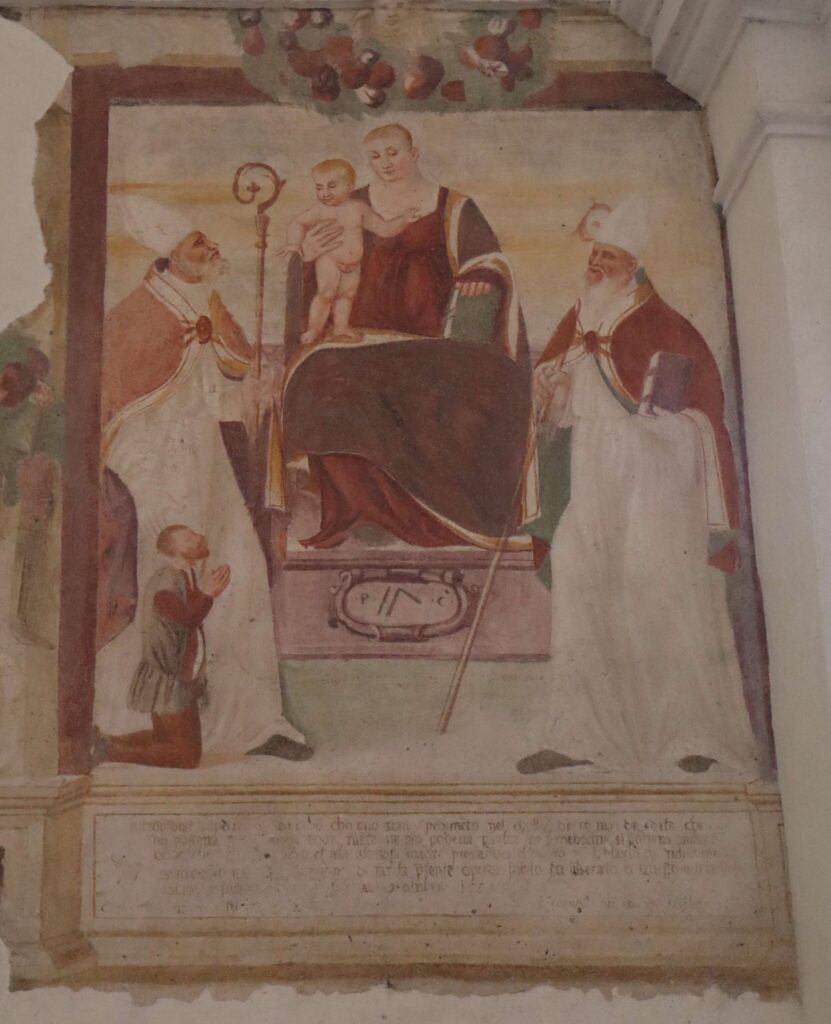
Artwork ex Wikimedia Commons