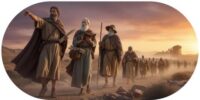
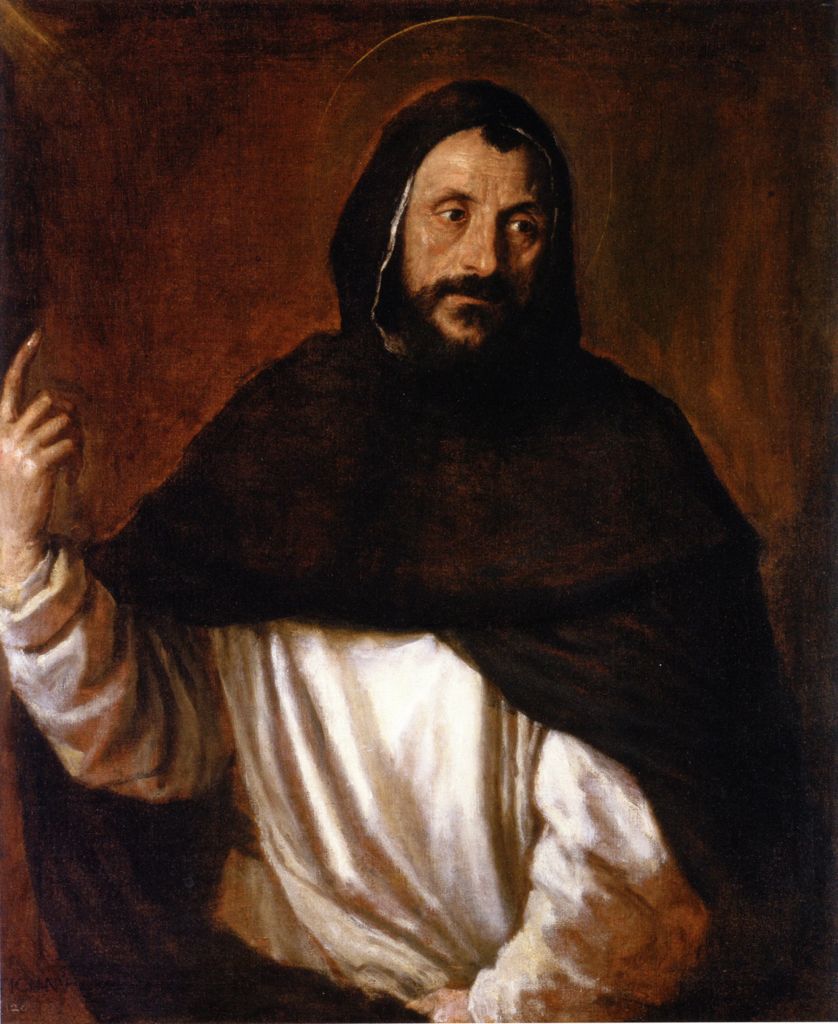
Saint Dominic (c. 1170 – 1221)
Saint Dominic (Spanish: San Domingo), born Dominic de Guzmán, was a Spanish priest, theologian, and the founder of the Order of Preachers (popularly known as the Dominicans). He revolutionized medieval religious life by pairing strict evangelical poverty with rigorous intellectual study and active itinerant preaching.
Early Life and Visionary Beginnings
- Birth & Lineage: Dominic was born around 1170 in Caleruega, in the Kingdom of Castile (modern-day Spain), to a noble family. His mother was Blessed Joan of Aza and his father was Felix de Guzmán.
- The Mother’s Dream: According to early biographies, while pregnant with Dominic, his mother had a vision that she was carrying a small dog in her womb holding a burning torch in its mouth, setting the world ablaze. This gave rise to a famous pun on the order’s Latin name (Domini canes = “Hounds of the Lord”).
- Education & Priesthood: Dominic studied liberal arts and theology at the university in Palencia. During a severe famine, he sold his precious handwritten books to feed the starving, famously saying, “I will not study on dead skins while living men die of hunger.” He twice tried to sell himself into slavery to obtain money for the liberation of those who were held in captivity by the Moors.
In 1194, he was ordained a priest and joined the Canons Regular at the Cathedral of Osma.
Mission in Languedoc and the Cathar Crisis
In 1203, Dominic accompanied his bishop, Diego de Acebo, on a diplomatic mission through southern France (Languedoc). There, they encountered the widespread Albigensian (Cathar) heresy, which taught that the physical world was evil and created by a dark spirit.
Dominic realized why previous Catholic efforts to convert the Cathars had failed:
- The Contrast of Living: Catholic papal legates traveled with lavish retinues, whereas Cathar leaders practiced strict ascetism.
- The Need for Education: Many parish priests lacked the theological training to debate complex ideas effectively.
Dominic proposed a radical new approach: Catholic preachers must travel on foot in apostolic poverty, living humbly while engaging in intellectual debate, persuasive dialogue, and deep doctrinal instruction.
Founding the Order of Preachers (Dominicans)
Unlike traditional monastic orders (like the Benedictines) whose monks remained inside enclosed monasteries, Dominic envisioned a mobile, educated brotherhood dedicated entirely to preaching and spiritual care.
- Prouille (1206): Dominic established a community at Prouille for women who had converted from Catharism, creating the foundation for Dominican contemplative nuns.
- Toulouse (1215): Dominic gathered a small group of like-minded men in Toulouse to form a preaching brotherhood.
- Papal Approval (1216): Pope Honorius III officially confirmed the Order of Preachers.
Dominic immediately sent his friars to the great university cities of Europe—primarily Paris and Bologna—to study, write, and recruit scholars. This focus on scholarship produced some of Christianity’s greatest theologians, including Saint Thomas Aquinas and Saint Albert the Great.
Spirituality and Traditions
- Motto: Veritas (“Truth”) and Contemplari et contemplata aliis tradere (“To contemplate and to hand on to others the fruits of contemplation”).
- The Rosary Tradition: Pious tradition holds that the Virgin Mary appeared to Saint Dominic in 1214 at Prouille, giving him the Rosary as a spiritual tool to combat heresy and convert hearts. While prayer beads existed earlier, Dominic and his order played a central role in shaping and popularizing the Rosary worldwide.
- Character: Contemporaries described Dominic as joyful, deeply compassionate, and constant in prayer, noting that he “spoke only to God or about God.”
Final Years, Death, and Legacy
- Death: Exhausted from years of continuous travel across Europe organizing the rapidly expanding order, Dominic fell ill in Italy and died in Bologna on August 6, 1221, at the age of 51. He requested to be buried “under the feet of his brethren.”
- Canonization: He was canonized by Pope Gregory IX in 1234, who remarked that he had no more doubt of Dominic’s sanctity than he had of that of the Apostles.
- Not only Saint Dominic but also his brothers, Antonio and Manes, were distinguished for their extraordinary sanctity. Antonio, the eldest, became a secular priest and, having distributed his patrimony to the poor, entered a hospital where he spent his life ministering to the sick. Manes, following in the footsteps of Dominic, became a Friar Preacher, and was beatified by Gregory XVI.
- Feast Day: Celebrated on August 8 in the Roman Catholic calendar.
- Patronage: Patron saint of astronomers, scientists, falsely accused persons, and the Dominican Republic.
Catholic Encyclopedia
Wikipedia