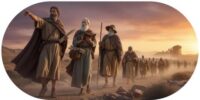
Saint of the Day – 1 June

Saint Justin Martyr (c. 100 – c. 165 AD) stands as one of the most vital bridge-builders in early Christian history. Operating in the
mid-2nd century, he was the first major Christian intellectual to deliberately harmonize the worlds of Greek philosophy and Christian theology. Wearing the distinct cloak of a professional philosopher until the day he was executed, Justin argued that Christianity was not a bizarre, superstitious mystery cult, but rather the ultimate fulfilment of all true philosophy.
Early Life
While Saint Justin Martyr details his intellectual search in his Dialogue with Trypho, he provides very few biographical details about his childhood or his family. However, by taking the small clues he leaves behind and cross-referencing them with the archaeology and history of the 2nd-century Roman Empire, we can piece together a vivid picture of his upbringing.
1. Born in a Pagan Roman Colony
Justin notes that he was born in Flavia Neapolis in Palestine (the region of Samaria). This detail alone tells us a great deal about his environment:
- The City: The city was brand new. It had been founded in 72 AD by the Emperor Vespasian to replace the ancient biblical city of Shechem, which had been destroyed during the First Jewish-Roman War.
- The Culture: Flavia Neapolis was built as a Greco-Roman pagan colony. It featured Roman architecture, amphitheatres, and pagan temples—most notably a massive temple dedicated to Zeus on nearby Mount Gerizim. Justin grew up surrounded by classic Roman civic life, completely isolated from the Jewish and Samaritan religious practices of the surrounding rural areas.
2. A Privileged, Gentile Family
Justin explicitly states that he was a Gentile and grew up uncircumcised. His family line points to a classic Roman colonial background:
- Names of His Ancestors: Justin records that his father’s name was Priscus and his grandfather’s name was Bacchius. These names strongly suggest a Greek or Roman heritage.
- Socio-Economic Status: His family was clearly wealthy and part of the educated elite. The fact that Justin was able to spend his youth traveling across the Mediterranean world, entirely unburdened by manual labour, and could afford to pay the hefty tuition fees of multiple elite philosophical schools indicates that his family possessed significant financial status—likely owning land or holding civic office in the colony.
3. A Thoroughly Pagan Upbringing
Justin grew up completely unexposed to Judaism or Christianity. He was raised on the classic educational curriculum of the Roman Empire, which meant memorizing Homer’s Iliad and Odyssey, studying rhetoric, and participating in the civic cults and sacrifices to the traditional Roman gods.
He notes that he initially viewed Christians the same way the rest of the Roman elite did: as an obscure, dangerous, and highly suspicious group of outlaws rumoured to practice black magic, cannibalism, and subversion against the Emperor.
4. The Intellectual Quest of His Youth
As a young man, Justin experienced a profound existential restlessness that his traditional pagan upbringing could not satisfy. He became consumed by a desire to understand the purpose of existence and to achieve what Plato called the “vision of God.”
This drove him to leave Flavia Neapolis as a young adult to seek out the greatest minds of his era. He traveled to the major intellectual hubs of the empire—most likely spending time in Alexandria, Egypt, before eventually arriving in Ephesus—where his famous encounter with the old man on the seashore , as detailed in his Dialogue with Trypho,, would finally alter the course of his life.
The Search for Truth: From Plato to Christ
In his autobiographical work, Dialogue with Trypho, he describes his disappointing journey through the major academic institutions of the Roman Empire:
The Stoics; The Aristotelians;The Pythagoreans and finally, Justin found temporary intellectual satisfaction in Platonism. The abstract contemplation of immaterial realities and the “vision of God” captivated his mind.
The Old Man on the Seashore
Around 130 AD, while walking along the seashore in Ephesus and meditating on Platonic ideas, Justin encountered a mysterious, elderly Christian man. The old man systematically challenged Justin’s reliance on human philosophy alone, pointing him instead to the ancient Hebrew prophets who spoke by the power of the Holy Spirit and witnessed the fulfillment of truth in Jesus Christ.
Deeply moved by this conversation—and heavily influenced by the sheer courage of Christian martyrs, whom he realized could not possibly be living in wicked, cowardly secrecy if they died so bravely—Justin converted to Christianity at roughly 30 years old.
The First Academic Defender of the Faith
Justin did not discard his philosopher’s gown (pallium) upon his baptism. Instead, he viewed Christianity as the only “safe and profitable philosophy.” He traveled to Rome, established a Christian school in his private apartment, and began issuing public defenses of the faith addressed to the Roman Emperor Antoninus Pius and the Roman Senate.
These writings created a brand-new genre of Christian literature: Apologetics (from the Greek apologia, meaning a formal courtroom defense).
The First and Second Apologies
In these letters, Justin used his legal and philosophical training to demand justice for Christians. His arguments were brilliant and multi-layered:
- Innocence by Association: He argued that Christians were the Emperor’s best citizens and allies because their moral code demanded honesty, paying taxes, and praying for the state.
- Rational Worship: He systematically dismantled the pagan rumours of incest and cannibalism by providing the oldest surviving, detailed descriptions of Christian baptism and the Sunday Eucharistic Liturgy.
The Theological Legacy: The Logos Christology
Justin’s most enduring contribution to theology is his development of the Logos concept.
In ancient Greek philosophy, Logos meant “Reason,” “Word,” or the underlying cosmic ordering principle of the universe. In the Gospel of John, Jesus is identified as the Logos made flesh. Justin combined these two concepts to create a universal framework for human history.
Justin argued that a “Seed of the Logos” (Logos spermatikos) had been scattered across the entire human race throughout history. Therefore, any human being who lived according to reason was participating in Christ, even if they lived before the Incarnation. He famously claimed that ancient philosophers like Socrates and Heraclitus were, in a sense, “Christians before Christ” because they followed the partial truth available to them, which eventually led to Socrates being executed by the state for exposing false gods.
The Dialogue with Trypho
Apart from his defenses to the pagans, Justin wrote the Dialogue with Trypho, which records a lengthy, respectful, yet intense two-day debate with a Jewish intellectual named Trypho. In this work, Justin uses his mastery of the Hebrew Scriptures to argue that:
The Christian Church is the true, spiritual Israel.
The Old Covenant has been fulfilled and superseded by the New Covenant.
Jesus is the true Messiah prophesied in the Old Testament.
Martyrdom in Rome
Justin’s uncompromising public debates eventually sealed his fate. A rival Cynic philosopher named Crescens, whom Justin had publicly humiliated in an intellectual dispute, reportedly denounced him to the Roman authorities.
Around 165 AD, during the reign of the philosopher-emperor Marcus Aurelius, Justin and six of his students a woman named Charites ; Chariton; Euelpistus (a slave in the imperial household); Hierax; Paeon and Liberianus were arrested by the urban prefect of Rome, Junius Rusticus.
The official court transcripts of his trial have survived. Excerpts can be read below or listened to on our YOUTUBE channel.
Justin and his companions were scourged and subsequently beheaded. Because he died directly defending the truth of the faith, the Church permanently attached his vocation to his name, remembering him forever not just as Justin the Philosopher, but as Justin Martyr. His liturgical feast day is celebrated on June 1.

The martyrdom of the holy martyrs Justin, Chariton, Charites, Euelpistus, Hierax, Pæon and Liberianus, who suffered at Rome
Chapter 1. Examination of Justin by the prefect
In the time of the lawless partisans of idolatry, wicked decrees were passed against the godly Christians in town and country, to force them to offer libations to vain idols; and accordingly the holy men, having been apprehended, were brought before the prefect of Rome, Rusticus by name.
And when they had been brought before his judgment-seat, said to Justin, Obey the gods at once, and submit to the kings.
Justin said, To obey the commandments of our Saviour Jesus Christ is worthy neither of blame nor of condemnation.
Rusticus the prefect said, What kind of doctrines do you profess?
Justin said, I have endeavoured to learn all doctrines; but I have acquiesced at last in the true doctrines, those namely of the Christians, even though they do not please those who hold false opinions.
Rusticus the prefect said, Are those the doctrines that please you, you utterly wretched man?
Justin said, Yes, since I adhere to them with right dogma.
Rusticus the prefect said, What is the dogma?
Justin said, That according to which we worship the God of the Christians, whom we reckon to be one from the beginning, the maker and fashioner of the whole creation, visible and invisible; and the Lord Jesus Christ, the Son of God, who had also been preached beforehand by the prophets as about to be present with the race of men, the herald of salvation and teacher of good disciples.
And I, being a man, think that what I can say is insignificant in comparison with His boundless divinity, acknowledging a certain prophetic power, since it was prophesied concerning Him of whom now I say that He is the Son of God. For I know that of old the prophets foretold His appearance among men.
Chapter 2. Examination of Justin continued
Rusticus the prefect said, Where do you assemble?
Justin said, Where each one chooses and can: for do you fancy that we all meet in the very same place? Not so; because the God of the Christians is not circumscribed by place; but being invisible, fills heaven and earth, and everywhere is worshipped and glorified by the faithful.
Rusticus the prefect said, Tell me where you assemble, or into what place do you collect your followers?
Justin said, I live above one Martinus, at the Timiotinian Bath; and during the whole time (and I am now living in Rome for the second time) I am unaware of any other meeting than his. And if any one wished to come to me, I communicated to him the doctrines of truth.
Rusticus said, Are you not, then, a Christian?
Justin said, Yes, I am a Christian.
Chapter 3. Examination of Chariton and others
Then said the prefect Rusticus to Chariton, Tell me further, Chariton, are you also a Christian?
Chariton said, I am a Christian by the command of God.
Rusticus the prefect asked the woman Charito, What say you, Charito?
Charito said, I am a Christian by the grace of God.
Rusticus said to Euelpistus, And what are you?
Euelpistus, a servant of Cæsar, answered, I too am a Christian, having been freed by Christ; and by the grace of Christ I partake of the same hope.
Rusticus the prefect said to Hierax, And you, are you a Christian?
Hierax said, Yes, I am a Christian, for I revere and worship the same God.
Rusticus the prefect said, Did Justin make you Christians?
Hierax said, I was a Christian, and will be a Christian.
And Pæon stood up and said, I too am a Christian.
Rusticus the prefect said, Who taught you?
Pæon said, From our parents we received this good confession.
Euelpistus said, I willingly heard the words of Justin. But from my parents also I learned to be a Christian.
Rusticus the prefect said, Where are your parents?
Euelpistus said, In Cappadocia.
Rusticus says to Hierax, Where are your parents?
And he answered, and said, Christ is our true father, and faith in Him is our mother; and my earthly parents died; and I, when I was driven from Iconium in Phrygia, came here.
Rusticus the prefect said to Liberianus, And what say you? Are you a Christian, and unwilling to worship [the gods]?
Liberianus said, I too am a Christian, for I worship and reverence the only true God.
Chapter 4. Rusticus threatens the Christians with death
The prefect says to Justin, Hearken, you who are called learned, and think that you know true doctrines; if you are scourged and beheaded, do you believe you will ascend into heaven?
Justin said, I hope that, if I endure these things, I shall have His gifts. For I know that, to all who have thus lived, there abides the divine favour until the completion of the whole world.
Rusticus the prefect said, Do you suppose, then, that you will ascend into heaven to receive some recompense?
Justin said, I do not suppose it, but I know and am fully persuaded of it.
Rusticus the prefect said, Let us, then, now come to the matter in hand, and which presses. Having come together, offer sacrifice with one accord to the gods.
Justin said, No right-thinking person falls away from piety to impiety.
Rusticus the prefect said, Unless you obey, you shall be mercilessly punished.
Justin said, Through prayer we can be saved on account of our Lord Jesus Christ, even when we have been punished, because this shall become to us salvation and confidence at the more fearful and universal judgment-seat of our Lord and Saviour.
Thus also said the other martyrs: Do what you will, for we are Christians, and do not sacrifice to idols.
Chapter 5. Sentence pronounced and executed
Rusticus the prefect pronounced sentence, saying, Let those who have refused to sacrifice to the gods and to yield to the command of the emperor be scourged, and led away to suffer the punishment of decapitation, according to the laws.
The holy martyrs having glorified God, and having gone forth to the accustomed place, were beheaded, and perfected their testimony in the confession of the Saviour. And some of the faithful having secretly removed their bodies, laid them in a suitable place, the grace of our Lord Jesus Christ having wrought along with them, to whom be glory for ever and ever. Amen.
Sources:
Catholic Encyclopedia
The writings of Justin
Martyrdom of Justin
Newadvent.org