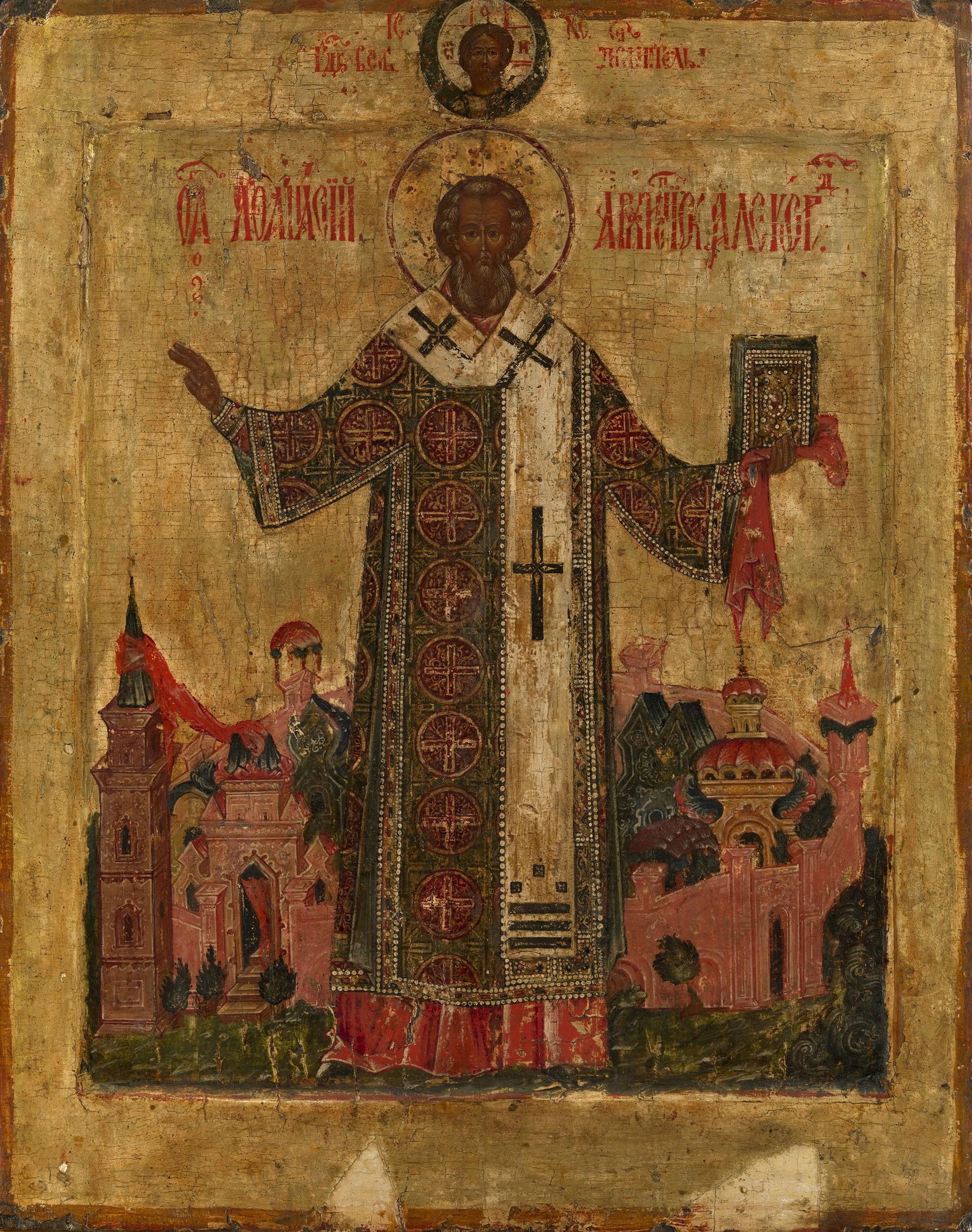
Saint Athanasius of Alexandria (c. 296–373 AD) is often called the Father of Orthodoxy or, Athanasius Contra Mundum (“Athanasius against the world”). He spent the better part of his 45-year episcopacy in a high-stakes battle against Arianism to define the nature of Christ.
Early Life
There is some historical debate regarding his family’s original background, but the consensus leans toward a wealthy, established family in Egypt; His parents were wealthy enough to provide him with an exceptional, elite education. He was thoroughly trained in Greek literature, grammar, rhetoric, jurisprudence, and philosophy.
Athanasius was born around 296 AD in Alexandria, Egypt. This timing meant his formative childhood years were forged in the fires of the Great Persecution under Diocletian and Maximinus (303–311 AD).
This left a permanent mark on his psyche. He didn’t just learn the Christian faith from books; he saw it in action. This firsthand experience explains his absolute, immovable refusal to compromise with the Arian heresy later in life—he had seen people die for the true identity of Christ.
The Witness of the Martyrs: From the ages of roughly five to fourteen, young Athanasius witnessed horrific imperial violence against Christians. He saw friends, playmates, and teachers from the Catechetical School of Alexandria dragged off to be martyred.
The Great Defender
Athanasius was a protégé of Bishop Alexander. While still a young deacon, he accompanied Alexander to the Council of Nicaea (325 AD). Though he couldn’t vote, his intellectual fingerprints were all over the defense of the Homoousios—the doctrine that the Son is of the “same substance” as the Father.
In 328 AD, he succeeded Alexander as Bishop. Because he refused to compromise with the Arians (who argued that Jesus was a created being), he was exiled five different times by various Roman Emperors. He spent roughly 17 of his 45 years as bishop in hiding or in foreign lands. However, Athanasius outlasted the very men who tried to erase him from history.
Exile
During his exiles, Athanasius often fled to the Egyptian desert to live with the monks. This resulted in his famous work, The Life of Saint Anthony, which introduced the monastic lifestyle to the Western world.
Athanasius’s time in the West (Trier and Rome) was a turning point for Church history. He introduced the Roman Church to the concept of Eastern Monasticism by telling stories of Saint Anthony.
He also ensured that the Western bishops remained staunchly “Nicene,” which eventually led to the triumph of Orthodoxy at the Council of Constantinople in 381 AD.
The third exile (356–362 AD) is often considered the most dramatic chapter of Athanasius’s life. It began with a literal midnight raid and ended with him becoming a “ghost” in the Egyptian desert, protected by a vast network of monks.
On February 8, 356 AD, while Athanasius was leading a late-night vigil in the Church of St. Theonas in Alexandria, 5,000 Roman soldiers surrounded the building. They burst through the doors with swords drawn.
According to his own account, Athanasius sat calmly on his throne and ordered the deacon to chant Psalm 136. As the congregation began to flee in the chaos, the monks and clergy literally hoisted Athanasius up and spirited him out of the church under the cover of darkness. He vanished into the night just as the soldiers reached the altar.
For the next six years, Athanasius lived a nomadic existence.He moved between the monasteries of the Nitrian Desert and the Thebaid (Upper Egypt). The monks, led by figures like Pachomius, were fiercely loyal. They created a human shield, moving him from one cell to another whenever Imperial scouts got too close.
This was his most productive literary period. Without a desk or a library, he wrote his most scathing polemics against the Arians, including the History of the Arians and the Four Discourses Against the Arians. He also wrote the Life of Saint Antony during this time.
He only emerged in 362 AD when the new Emperor, Julian the Apostate, issued an edict allowing all exiled bishops to return to their sees.
The Final Years (366–373 AD)
After his fifth and final exile, Athanasius spent his last seven years in relative peace in Alexandria. He wasn’t just resting, though; he was preparing the next generation.
The Mentor: He spent much of this time corresponding with Basil the Great, one of the “Cappadocian Fathers.” Basil would eventually finish the work Athanasius started, leading the charge for Orthodoxy at the Council of Constantinople in 381 AD.
The 39th Festal Letter (367 AD): In one of his most famous administrative acts, he issued an Easter letter that listed the 27 books of the New Testament. This is the earliest known list that matches our modern Bible exactly.
Athanasius died peacefully in his bed on May 2, 373 AD, surrounded by his clergy.
He didn’t live to see the Council of Constantinople (381 AD), which finally made the Nicene faith the official religion of the Empire and ended the Arian dominance.
However, his victory was already won. By the time he died, he had transformed the office of Bishop from a local administrator into a global defender of Truth who could stand up even to Emperors.
Sources:
Athanasius of Alexandria, Select Works and Letters: Found in the Nicene and Post-Nicene Fathers (NPNF) series, Vol. 4.
NewAdvent.org (Catholic Encyclopedia)