
Saint of the Day – 20 May
St. Bernardine of Siena (September 8, 1380 – May 20, 1444)
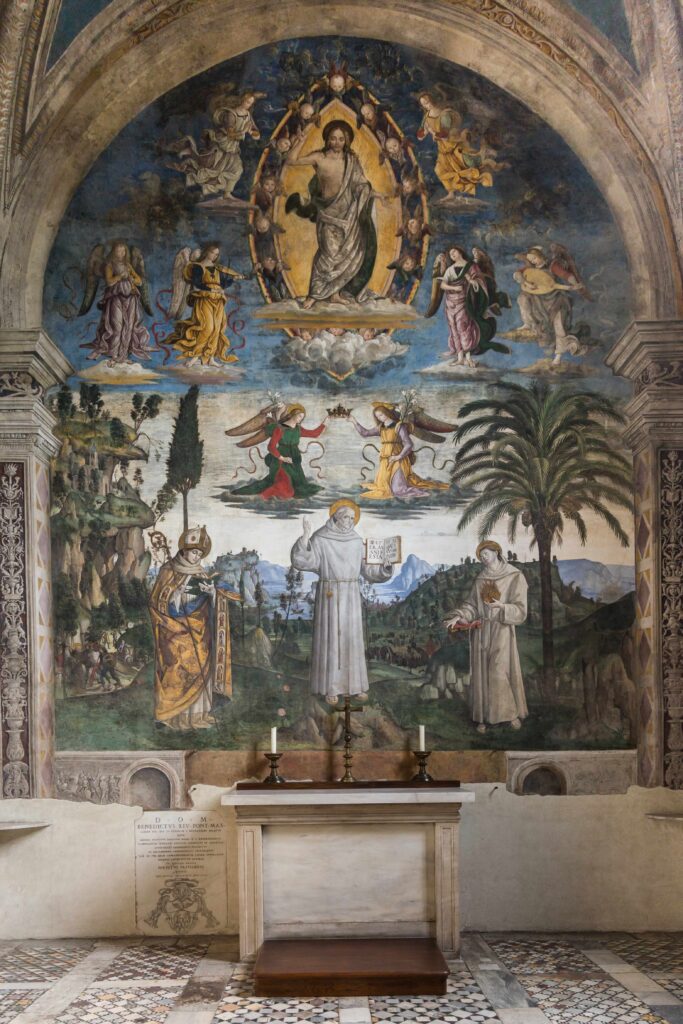
He was one of the most spectacular and influential figures of the Italian Renaissance. Known as the “Apostle of Italy,” he was a Franciscan priest, a master of public psychology, a brilliant theologian, and a tireless reformer who single-handedly revitalized the spiritual landscape of 15th-century Italy.
1. Early Life and Education
Bernardino was born into the noble Albizeschi family in Massa Marittima (near Siena), Tuscany. Tragically, by the time he was seven years old, both of his parents had died, and he was raised by devout aunts.
He received an exceptional, well-rounded classical education in Siena, studying grammar, rhetoric, and canon law. He was highly intelligent, deeply sensitive, and naturally charismatic. In the year 1400, when a devastating plague swept through Siena, the 20-year-old Bernardine organized a group of young men to run the local hospital, Santa Maria della Scala. For four grueling months, he risked his life tending to the dying, an experience that permanently forged his pastoral heart.
2. The Franciscan Reformer
After recovering from a severe illness contracted while working at the hospital, Bernardino distributed his inheritance to the poor and joined the Franciscan Friars Minor Recollect (the Observants) in 1402. He was ordained a priest in 1404.
At the time, the Franciscan Order was deeply divided, and Christian Europe was spiritually fractured from the aftermath of the Western Schism. Bernardino dedicated himself to the Observant Reform, a movement seeking to pull the Franciscans back to the strict, radical poverty and simplicity originally practiced by St. Francis of Assisi.
3. The Great Traveling Preacher
For the first decade of his priesthood, Bernardino lived a quiet, hidden life of prayer. But in 1417, his extraordinary gift for public speaking was recognized, and he began a monumental, 30-year preaching crusade across the length and breadth of Italy.
Bernardino revolutionized the art of preaching:
- The Style: Instead of delivering dry, academic Latin sermons inside crowded churches, he spoke in the vernacular Italian. He preached in massive open-air public squares, sometimes drawing crowds of over 30,000 people.
- The Delivery: He was incredibly animated, using humour, dramatic storytelling, biting satire, and deeply emotional appeals. He spoke directly to the everyday realities of Renaissance life—condemning economic corruption, corporate greed, usury, gambling, and the violent, bloody political factions tearing Italian cities apart.
4. The IHS Monogram
To give the fractured cities a unifying symbol of peace to replace their warring family crests and political banners, Bernardino popularized the devotion to the Holy Name of Jesus.
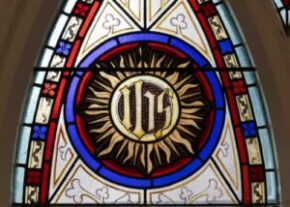
The Sun of Christ’s Name and 12 Rays representing the Apostles
He designed a specific tablet featuring the monogram IHS (the first three letters of the name of Jesus in Greek) surrounded by a blazing sun with 12 undulating rays. At the end of his explosive sermons, he would hold this tablet aloft for the thousands of weeping listeners to venerate. This practice drew immense love from the people, but it also drew heavy suspicion from theological rivals who accused him of heresy and idolatry. He was put on trial before the Pope three separate times, but each time he was triumphantly acquitted, largely due to a brilliant defence mounted by his student and fellow future saint, John of Capistrano.
5. Later Years and Death
Bernardine’s holiness and administrative brilliance were so highly regarded that he was offered the prestigious positions of Bishop of Siena, Bishop of Ferrara, and Bishop of Urbino. He steadfastly refused all three honours, famously joking that his parish was the entire world.
From 1438 to 1442, he served as the Vicar General of the Observant Franciscans. Under his leadership, the number of Observant friars in Italy skyrocketed from a mere 300 to over 4,000.
Exhausted by decades of ceaseless travel and ascetic penances, Bernardino continued preaching until the very end. He died on May 20, 1444, in the city of L’Aquila, while on his way to preach a mission in Naples.
6. Canonization and Patronage
Due to the deluge of miracles reported at his tomb, Pope Nicholas V canonized him just six years later, in 1450.
His feast day is celebrated on May 20.
Source:
Saint Bernardino Sermons
Selected and edited by Don NAZARENO ORLANDI Translated by HELEN JOSEPHINE ROBINS
SIENA TIPOGRAOTIA SOOIALB 1920